
Showing posts with label medicinal. Show all posts
Showing posts with label medicinal. Show all posts
Thursday, December 13, 2012
"How To Make A Poultice" (To Treat Many Skin Ailments!)
You can make a poultice to draw infection, treat boils and abcesses, relieve inflammation or a rash or simply draw the poison from a bee sting!
What is a poultice? A homemade poultice is made by mashing herbs, plant material or another substance with warm water or natural oils to make a paste. The paste can be applied directly to the skin and covered with a piece of clean cloth. If the herb used is potent such as onion, garlic, ginger, mustard, etc., you may want a layer of thin cloth between the skin and the herb. The cloth can then be covered with plastic wrap to hold in the moisture. The poultice can be changed every 3 to 4 hours or whenever it dries out.
A compress is used the same way but usually warm liquids are applied to the cloth instead of raw substances. Tinctures or herbal infusions are great for compresses.
The list of ingredients to use for a homemade poultice is endless!
Make a Poultice for Boils, Infections, Abcesses and Inflammation
The following poultice ingredients have properties to draw out infections reduce inflammation. These poultices can even be used to treat chest congestion, hemorrhoids and earaches. Don't forget that you can use poultices or compresses on your pets and livestock also!
Onion Poultice- mash raw onion and mix with warm water or organic plant oils. You may want a thin layer of cloth between your skin and the onion.
Watch a video on how to make an onion poultice here. (More instructional videos can be seen at the bottom of this page)
Potato Poultice- Grate a raw potato and make your paste! A potato poultice is good for inflammation and eye troubles such as conjunctivitis.
Mustard Poultice - Mash some mustard seeds, mix with natural oil or water and apply. Use thin cloth between paste and skin. A homemade mustard poultice is very powerful and can burn your skin if applied directly.
Plantain Poultice- Plantain is a commom weed that has great drawing power. Mash the fresh weed for the paste or use a tincture as a compress. See the Insect Bite Remedy Page for more information on plantain.
Activated Charcoal - Super absorbing properties!
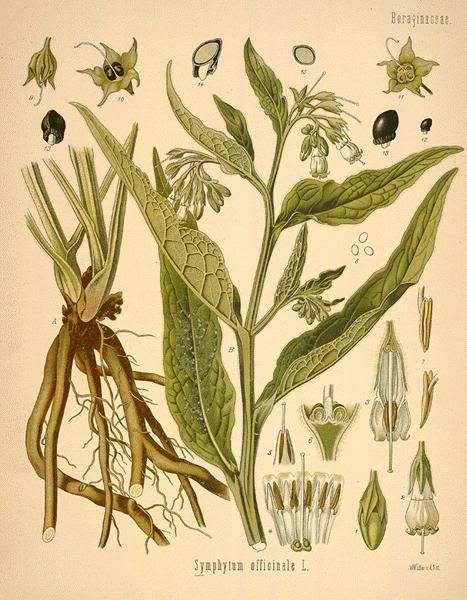
Comfrey Poultice - Comfrey roots and leaves have great healing properties especially where bones and ligaments are involved! Make a poultice out of comfrey for any aches or pains.
Tumeric Poultice- Organic Tumeric makes a great drawing poultice for boils and infections. For even better results take up to one teaspoon tumeric in a cup of warm milk along with using the external tumeric poultice. (Tumeric is also known as turmeric or curcuma.)
Cayenne Pepper makes a great compress for arthritis and many other aches and pains.
Bread and Milk poultice - These work very well for infections and boils. Simply heat milk and add a bit of bread, wrap in gauze or cheese cloth and place on cut or wound. Use as hot as you can stand it. Repeat a few times a day as long as necessary. It works pretty fast and often much better than over the counter products.
Lemon Balm Poultice - Lemon balm leaves make a poultice for small wounds, cold sores and insect bites.
Mountain Rose Herbs. A herbs, health and harmony c
MAKE A COMFREY POULTICE FOR SPRAINS AND BRUISES
1. Snip or crush a small handful of comfrey leaves into a dish.
2. Pour enough boiling water on the leaves to cover them.
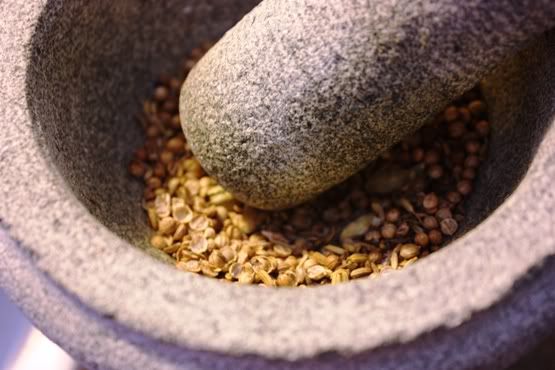
3. Mash into a pulp with a spoon. A pestle and mortar works great for this!
4. Let cool a little then spread the pulp directly on the affected area. Cover with gauze and bandage to hold in the poultice in place. Leave on for several hours.
MAKE A SLIPPERY ELM AND THYME POULTICE FOR BOILS
Slippery elm has great healing properties and thyme is a great antiseptic. Try a plantain poultice for boils also.
1. Mash thyme leaves and cover with boiling water (same as comfrey poultice).
2. Pour off excess water and mix in 2 tablespoons of slippery elm powder.
3. Apply directly to the boil or enclose the pulp in gauze. Leave in place for several hours.


Friday, June 8, 2012
Wild Edible Plants
Benefits, Hazards, and Major Groups
 We are surrounded by wild edible plants everyday. In trying to learn about them, you might quickly feel overwhelmed by the staggering amount of information available. Here are some important consideration for getting started:
- Identifying Plants
- Benefits
- Hazards
- Major Groupings
Identifying Plants
It is vital that you can identify the wild edible plants that you intend to utilize. Some edible plants have deadly poisonous look-alikes. Good field guides are invaluable. The best guides clearly explain identification, collection, and preparation techniques. We highly recommend the following guides:
- Identifying and Harvesting Wild Edible and Medicinal Plants by Steve Brill
- Discovering Wild Plants by Janice Schofield
Benefits
Wild edible plants are very beneficial for you and your family for many reasons. First of all, there are wild edibles growing near you no matter what part of the world you live in. Chances are good, you can find a large number of species where you live and some of them are likely to be plentiful.
Secondly, many wild plants are highly nutritious and can be even more nutritious than many store bought fruits and vegetables. For instance, dandelion which you might think of as little more than a garden-variety weed is actually an incredibly nutritious wild edible plant. In a single hundred gram amount of cooked dandelion greens, there is 11,000 mg of Potassium, 18 mg of vitamin C and 42 mg of calcium.
You might consider eating the dandelions in your yard, rather than removing or poisoning them. Though if you are going to consume wild edible plants, make sure you also consider the hazards.
Hazards
There are some dangers in collecting and eating wild edibles. To begin with, think about the location you are gathering and consider the following:
- Is the area sprayed with pesticides or herbicides?
- Is the area close to a busy road or other source of pollution?
- Does your target species have any poisonous look-alikes?
Also consider that wild edible plants are often more nutritionally concentrated than store bought foods - you may not need to eat as much quantity as you would of foods from home. It is also wise to start off eating very small quantities of wild edible plants, especially those you have not tried before, in case of potential allergic reactions. Test them before you collect or eat large quantities.
Also, the hazard many people forget to consider, and it is one of the most important, is the hazard you pose to the plants themselves!
Please practice wise and sustainable harvesting techniques. Consider the needs of the plants and the other animals that might feed on them.
If the plant you are harvesting is rare, is the only one of its kind on the location you are harvesting or especially if it is endangered, leave it alone!
Look for places where the species you are interested in gathering is plentiful. Also look for plants that have abundant fruit, nuts or berries. This will make your job of gathering less work and also, if you are considerate, it will leave less of an impact on the land. A good guidelines is to collect one third of the plant material, leaving two thirds for plant regeneration and wildlife.
Major Groupings of Wild Edible Plants
There are so many different kinds of plants out there in the world. It can really help to initially lump them into more manageable groups. Here are some of the major groups of wild edibles, organized by plant families:
The Lily Family (Liliaceae): This includes species such as:
- Wild onions
- Wild garlic
- Wild leeks
- Camas
- Glacier lilies
The Purslane Family (Portulacaceae): This includes:
- Miner’s Lettuce
- Spring Beauty
The Rose Family (Rosaceae): This includes edible plants such as:
- Blackberry
- Raspberry
- Salmonberry
- Thimbleberry
- Wild roses
- Hawthorn
- Serviceberry
- Choke-cherry
- Wild strawberry
- Silverweed
The Heath Family (Ericaceae): This includes species such as:
- Cranberry
- Blueberry
- Huckleberry
The Mustard Family (Brassicaceae): This includes plants such as:
- Pennycress
- Shepard’s purse
- Watercress
The Mint Family (Lamiaceae): This includes wild edibles such as:
- Wild mint
- Self-heal
The Sunflower Family (Asteraceae): This includes species such as:
- Dandelion
- Wild sunflower
- Salsify
- Chicory
- Pineapple weed
- Oxeye daisy
- Common burdock
- Thistle species
The Nettle Family (Urticaceae): This includes:
- Stinging nettle
The Cattail Family (Typhaceae): This includes:
- Narrow-leaf and broad-leaved cattail
The Beech Family (Fagaceae): This includes:
- Oaks
- Chestnuts
- Beeches
The Pine Family (Pinaceae): This includes trees such as:
- Pine
- Hemlock
- Douglas-fir
- Spruce
With proper identification and careful consideration of safety & potential hazards, edible wild plants can become an exciting and healthful part of your diet. Happy foraging!
We are surrounded by wild edible plants everyday. In trying to learn about them, you might quickly feel overwhelmed by the staggering amount of information available. Here are some important consideration for getting started:
- Identifying Plants
- Benefits
- Hazards
- Major Groupings
Identifying Plants
It is vital that you can identify the wild edible plants that you intend to utilize. Some edible plants have deadly poisonous look-alikes. Good field guides are invaluable. The best guides clearly explain identification, collection, and preparation techniques. We highly recommend the following guides:
- Identifying and Harvesting Wild Edible and Medicinal Plants by Steve Brill
- Discovering Wild Plants by Janice Schofield
Benefits
Wild edible plants are very beneficial for you and your family for many reasons. First of all, there are wild edibles growing near you no matter what part of the world you live in. Chances are good, you can find a large number of species where you live and some of them are likely to be plentiful.
Secondly, many wild plants are highly nutritious and can be even more nutritious than many store bought fruits and vegetables. For instance, dandelion which you might think of as little more than a garden-variety weed is actually an incredibly nutritious wild edible plant. In a single hundred gram amount of cooked dandelion greens, there is 11,000 mg of Potassium, 18 mg of vitamin C and 42 mg of calcium.
You might consider eating the dandelions in your yard, rather than removing or poisoning them. Though if you are going to consume wild edible plants, make sure you also consider the hazards.
Hazards
There are some dangers in collecting and eating wild edibles. To begin with, think about the location you are gathering and consider the following:
- Is the area sprayed with pesticides or herbicides?
- Is the area close to a busy road or other source of pollution?
- Does your target species have any poisonous look-alikes?
Also consider that wild edible plants are often more nutritionally concentrated than store bought foods - you may not need to eat as much quantity as you would of foods from home. It is also wise to start off eating very small quantities of wild edible plants, especially those you have not tried before, in case of potential allergic reactions. Test them before you collect or eat large quantities.
Also, the hazard many people forget to consider, and it is one of the most important, is the hazard you pose to the plants themselves!
Please practice wise and sustainable harvesting techniques. Consider the needs of the plants and the other animals that might feed on them.
If the plant you are harvesting is rare, is the only one of its kind on the location you are harvesting or especially if it is endangered, leave it alone!
Look for places where the species you are interested in gathering is plentiful. Also look for plants that have abundant fruit, nuts or berries. This will make your job of gathering less work and also, if you are considerate, it will leave less of an impact on the land. A good guidelines is to collect one third of the plant material, leaving two thirds for plant regeneration and wildlife.
Major Groupings of Wild Edible Plants
There are so many different kinds of plants out there in the world. It can really help to initially lump them into more manageable groups. Here are some of the major groups of wild edibles, organized by plant families:
The Lily Family (Liliaceae): This includes species such as:
- Wild onions
- Wild garlic
- Wild leeks
- Camas
- Glacier lilies
The Purslane Family (Portulacaceae): This includes:
- Miner’s Lettuce
- Spring Beauty
The Rose Family (Rosaceae): This includes edible plants such as:
- Blackberry
- Raspberry
- Salmonberry
- Thimbleberry
- Wild roses
- Hawthorn
- Serviceberry
- Choke-cherry
- Wild strawberry
- Silverweed
The Heath Family (Ericaceae): This includes species such as:
- Cranberry
- Blueberry
- Huckleberry
The Mustard Family (Brassicaceae): This includes plants such as:
- Pennycress
- Shepard’s purse
- Watercress
The Mint Family (Lamiaceae): This includes wild edibles such as:
- Wild mint
- Self-heal
The Sunflower Family (Asteraceae): This includes species such as:
- Dandelion
- Wild sunflower
- Salsify
- Chicory
- Pineapple weed
- Oxeye daisy
- Common burdock
- Thistle species
The Nettle Family (Urticaceae): This includes:
- Stinging nettle
The Cattail Family (Typhaceae): This includes:
- Narrow-leaf and broad-leaved cattail
The Beech Family (Fagaceae): This includes:
- Oaks
- Chestnuts
- Beeches
The Pine Family (Pinaceae): This includes trees such as:
- Pine
- Hemlock
- Douglas-fir
- Spruce
With proper identification and careful consideration of safety & potential hazards, edible wild plants can become an exciting and healthful part of your diet. Happy foraging!
 We are surrounded by wild edible plants everyday. In trying to learn about them, you might quickly feel overwhelmed by the staggering amount of information available. Here are some important consideration for getting started:
- Identifying Plants
- Benefits
- Hazards
- Major Groupings
Identifying Plants
It is vital that you can identify the wild edible plants that you intend to utilize. Some edible plants have deadly poisonous look-alikes. Good field guides are invaluable. The best guides clearly explain identification, collection, and preparation techniques. We highly recommend the following guides:
- Identifying and Harvesting Wild Edible and Medicinal Plants by Steve Brill
- Discovering Wild Plants by Janice Schofield
Benefits
Wild edible plants are very beneficial for you and your family for many reasons. First of all, there are wild edibles growing near you no matter what part of the world you live in. Chances are good, you can find a large number of species where you live and some of them are likely to be plentiful.
Secondly, many wild plants are highly nutritious and can be even more nutritious than many store bought fruits and vegetables. For instance, dandelion which you might think of as little more than a garden-variety weed is actually an incredibly nutritious wild edible plant. In a single hundred gram amount of cooked dandelion greens, there is 11,000 mg of Potassium, 18 mg of vitamin C and 42 mg of calcium.
You might consider eating the dandelions in your yard, rather than removing or poisoning them. Though if you are going to consume wild edible plants, make sure you also consider the hazards.
Hazards
There are some dangers in collecting and eating wild edibles. To begin with, think about the location you are gathering and consider the following:
- Is the area sprayed with pesticides or herbicides?
- Is the area close to a busy road or other source of pollution?
- Does your target species have any poisonous look-alikes?
Also consider that wild edible plants are often more nutritionally concentrated than store bought foods - you may not need to eat as much quantity as you would of foods from home. It is also wise to start off eating very small quantities of wild edible plants, especially those you have not tried before, in case of potential allergic reactions. Test them before you collect or eat large quantities.
Also, the hazard many people forget to consider, and it is one of the most important, is the hazard you pose to the plants themselves!
Please practice wise and sustainable harvesting techniques. Consider the needs of the plants and the other animals that might feed on them.
If the plant you are harvesting is rare, is the only one of its kind on the location you are harvesting or especially if it is endangered, leave it alone!
Look for places where the species you are interested in gathering is plentiful. Also look for plants that have abundant fruit, nuts or berries. This will make your job of gathering less work and also, if you are considerate, it will leave less of an impact on the land. A good guidelines is to collect one third of the plant material, leaving two thirds for plant regeneration and wildlife.
Major Groupings of Wild Edible Plants
There are so many different kinds of plants out there in the world. It can really help to initially lump them into more manageable groups. Here are some of the major groups of wild edibles, organized by plant families:
The Lily Family (Liliaceae): This includes species such as:
- Wild onions
- Wild garlic
- Wild leeks
- Camas
- Glacier lilies
The Purslane Family (Portulacaceae): This includes:
- Miner’s Lettuce
- Spring Beauty
The Rose Family (Rosaceae): This includes edible plants such as:
- Blackberry
- Raspberry
- Salmonberry
- Thimbleberry
- Wild roses
- Hawthorn
- Serviceberry
- Choke-cherry
- Wild strawberry
- Silverweed
The Heath Family (Ericaceae): This includes species such as:
- Cranberry
- Blueberry
- Huckleberry
The Mustard Family (Brassicaceae): This includes plants such as:
- Pennycress
- Shepard’s purse
- Watercress
The Mint Family (Lamiaceae): This includes wild edibles such as:
- Wild mint
- Self-heal
The Sunflower Family (Asteraceae): This includes species such as:
- Dandelion
- Wild sunflower
- Salsify
- Chicory
- Pineapple weed
- Oxeye daisy
- Common burdock
- Thistle species
The Nettle Family (Urticaceae): This includes:
- Stinging nettle
The Cattail Family (Typhaceae): This includes:
- Narrow-leaf and broad-leaved cattail
The Beech Family (Fagaceae): This includes:
- Oaks
- Chestnuts
- Beeches
The Pine Family (Pinaceae): This includes trees such as:
- Pine
- Hemlock
- Douglas-fir
- Spruce
With proper identification and careful consideration of safety & potential hazards, edible wild plants can become an exciting and healthful part of your diet. Happy foraging!
We are surrounded by wild edible plants everyday. In trying to learn about them, you might quickly feel overwhelmed by the staggering amount of information available. Here are some important consideration for getting started:
- Identifying Plants
- Benefits
- Hazards
- Major Groupings
Identifying Plants
It is vital that you can identify the wild edible plants that you intend to utilize. Some edible plants have deadly poisonous look-alikes. Good field guides are invaluable. The best guides clearly explain identification, collection, and preparation techniques. We highly recommend the following guides:
- Identifying and Harvesting Wild Edible and Medicinal Plants by Steve Brill
- Discovering Wild Plants by Janice Schofield
Benefits
Wild edible plants are very beneficial for you and your family for many reasons. First of all, there are wild edibles growing near you no matter what part of the world you live in. Chances are good, you can find a large number of species where you live and some of them are likely to be plentiful.
Secondly, many wild plants are highly nutritious and can be even more nutritious than many store bought fruits and vegetables. For instance, dandelion which you might think of as little more than a garden-variety weed is actually an incredibly nutritious wild edible plant. In a single hundred gram amount of cooked dandelion greens, there is 11,000 mg of Potassium, 18 mg of vitamin C and 42 mg of calcium.
You might consider eating the dandelions in your yard, rather than removing or poisoning them. Though if you are going to consume wild edible plants, make sure you also consider the hazards.
Hazards
There are some dangers in collecting and eating wild edibles. To begin with, think about the location you are gathering and consider the following:
- Is the area sprayed with pesticides or herbicides?
- Is the area close to a busy road or other source of pollution?
- Does your target species have any poisonous look-alikes?
Also consider that wild edible plants are often more nutritionally concentrated than store bought foods - you may not need to eat as much quantity as you would of foods from home. It is also wise to start off eating very small quantities of wild edible plants, especially those you have not tried before, in case of potential allergic reactions. Test them before you collect or eat large quantities.
Also, the hazard many people forget to consider, and it is one of the most important, is the hazard you pose to the plants themselves!
Please practice wise and sustainable harvesting techniques. Consider the needs of the plants and the other animals that might feed on them.
If the plant you are harvesting is rare, is the only one of its kind on the location you are harvesting or especially if it is endangered, leave it alone!
Look for places where the species you are interested in gathering is plentiful. Also look for plants that have abundant fruit, nuts or berries. This will make your job of gathering less work and also, if you are considerate, it will leave less of an impact on the land. A good guidelines is to collect one third of the plant material, leaving two thirds for plant regeneration and wildlife.
Major Groupings of Wild Edible Plants
There are so many different kinds of plants out there in the world. It can really help to initially lump them into more manageable groups. Here are some of the major groups of wild edibles, organized by plant families:
The Lily Family (Liliaceae): This includes species such as:
- Wild onions
- Wild garlic
- Wild leeks
- Camas
- Glacier lilies
The Purslane Family (Portulacaceae): This includes:
- Miner’s Lettuce
- Spring Beauty
The Rose Family (Rosaceae): This includes edible plants such as:
- Blackberry
- Raspberry
- Salmonberry
- Thimbleberry
- Wild roses
- Hawthorn
- Serviceberry
- Choke-cherry
- Wild strawberry
- Silverweed
The Heath Family (Ericaceae): This includes species such as:
- Cranberry
- Blueberry
- Huckleberry
The Mustard Family (Brassicaceae): This includes plants such as:
- Pennycress
- Shepard’s purse
- Watercress
The Mint Family (Lamiaceae): This includes wild edibles such as:
- Wild mint
- Self-heal
The Sunflower Family (Asteraceae): This includes species such as:
- Dandelion
- Wild sunflower
- Salsify
- Chicory
- Pineapple weed
- Oxeye daisy
- Common burdock
- Thistle species
The Nettle Family (Urticaceae): This includes:
- Stinging nettle
The Cattail Family (Typhaceae): This includes:
- Narrow-leaf and broad-leaved cattail
The Beech Family (Fagaceae): This includes:
- Oaks
- Chestnuts
- Beeches
The Pine Family (Pinaceae): This includes trees such as:
- Pine
- Hemlock
- Douglas-fir
- Spruce
With proper identification and careful consideration of safety & potential hazards, edible wild plants can become an exciting and healthful part of your diet. Happy foraging!
Wednesday, February 22, 2012
Dandelion
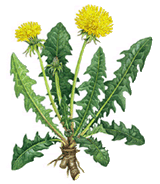 The dandelion is a perennial, herbaceous plant with long, lance-shaped leaves. They're so deeply toothed, they gave the plant its name in Old French: Dent-de-lion means lion's tooth in Old French.
The leaves are 3 to 12" long, and 1/2 to 2-1/2" wide, always growing in a basal rosette.
he flower head can change into the familiar, white, globular seed head overnight. Each seed has a tiny parachute, to spread far and wide in the wind.

The thick, brittle, beige, branching taproot grows up to 10" long. All parts of this plant exude a white milky sap when broken.
Dandelion leaves are at their best when they've just emerged.
There are no poisonous look-alikes. Other very similar Taraxacum species, as well as chicory and wild lettuce only resemble dandelions in the early spring. All these edibles also exude a white milky sap when injured, but chicory and wild lettuce leaves have some hair, at least on the underside of the midrib, while Taraxacum leaves are bald. Unlike the other genera, Taraxacum stays in a basal rosette. It never grows a tall, central, stalk bearing flowers and leaves.
Dandelions are especially well-adapted to a modern world of "disturbed habitats," such as lawns and sunny, open places. They were even introduced into the Midwest from Europe to provide food for the imported honeybees in early spring. They now grow virtually worldwide. Dandelions spread further, are more difficult to exterminate, and grow under more under adverse circumstances than most competitors.
Most gardeners detest them, but the more you try to weed them up, the faster they grow.
The taproot is deep, twisted, and brittle.
Unless you remove it completely, it will regenerate. If you break off more pieces than you unearth, the dandelion wins. "What's a dandelion digger for?" a dandelion asked.
"Itís a human invention to help us reproduce," another dandelion replied.
Collect dandelion leaves in early spring, when they're the tastiest, before the flowers appear. Harvest again in late fall. After a frost, their protective bitterness disappears. Dandelions growing in rich, moist soil, with the broadest leaves and largest roots, are the best. Select the youngest individuals, and avoid all plants with flowers. Some people eat the greens from spring to fall, when they're very bitter. Others boil out the summer bitterness (and water-soluble vitamins) out in two changes of water. Itís all a matter of preference.
Dandelion greens are wonderful in salads, sautÈed or steamed. They taste like chicory and endive, with an intense heartiness overlying a bitter tinge.
People today shun bitter flavorsótheyíre so conditioned by overly sweet or salty processed food. But in earlier times, we distinguished between good and bad bitterness.Mixed with other flavors, as in a salad, dandelions improve the flavor.

I also love sautÈing them for about 20 minutes with onions and garlic in olive oil, adding a little home-made wine before they're done. If you're not used to the slight bitterness, cook them with sweet vegetables, especially sliced carrots and parsnips. Boiling dandelions in one or more changes of water makes them milderóa good introduction if you're new to natural foods. Early spring is also the time for the crownógreat sautÈed, pickled, or in cooked vegetable dishes.
You can also eat dandelion flowers, or use them to make wine. Collect them in a sunny meadow, just before mid-spring, when the most flowers bloom. Some continue to flower right into the fall. Use only the flowerís yellow parts. The green sepals at the flowerís base are bitter.
The flowers add color, texture, and an unusual bittersweet flavor to salads. You can also sautÈ them, dip them in batter and fry them into fritters, or steam them with other vegetables. They have a meaty texture that contrasts with other lighter vegetables in a stir-fry dish or a casserole. A Japanese friend makes exceptionally delicious traditional dandelion flower pickles, using vinegar and spices.
The taproot is edible all year, but is best from late fall to early spring. Use it as a cooked vegetable, especially in soups. Although not as tasty as many other wild root vegetables, Itís not bad. I remember finding large dandelions with huge roots growing on the bottom of a grassy hillside. They were only mildy bitter, so I threw them into a potato stock. With the added scallions, tofu, ginger, carrots and miso, this became an excellent Japanese miso soup.
Pre-boiling and changing the water, or long, slow simmering mellows this root. Sweet vegetables best complement dandelion roots. Sauteing the roots in olive oil also improves them, creating a robust flavor. A little Tamari soy sauce and onions complete this unusual vegetable side dish.
The leaves are more nutritious than anything you can buy. They're higher in beta-carotene than carrots. The iron and calcium content is phenomenal, greater than spinach. You also get vitamins B-1, B-2, B-5, B-6, B-12, C, E, P, and D, biotin, inositol, potassium, phosphorus, magnesium, and zinc by using a tasty, free vegetable that grows on virtually every lawn. The root contains the sugar inulin, plus many medicinal substances.
Dandelion root is one of the safest and most popular herbal remedies. The specific name, officinale, means that It's used medicinally. The decoction is a traditional tonic. Itís supposed to strengthen the entire body, especially the liver and gallbladder, where it promotes the flow of bile, reduces inflammation of the bile duct, and helps get rid of gall stones. This is due to its taraxacin. Itís good for chronic hepatitis, it reduces liver swelling and jaundice, and it helps indigestion caused by insufficient bile. Don't use it with irritable stomach or bowel, or if you have an acute inflammation.
The modern French name for this plant is pissenlit (lit means bed) because the root and leaf tea act on the kidneys as a gentle diuretic, improving the way they cleanse the blood and recycle nutrients. Unlike pharmaceuticals diuretics, this doesn't leach potassium, a vital mineral, from the body. Improved general health and clear skin result from improved kidney function. One man I spoke to even claims he avoided surgery for urinary stones by using dandelion root tea alone.
Dandelions are also good for the bladder, spleen, pancreas, stomach and intestines. Itís recommended for stressed-out, internally sluggish, and sedentary people. Anyone who's a victim of excessive fat, white flour, and concentrated sweeteners could benefit from a daily cup of dandelion tea.
Dandelion rootís inulin is a sugar that doesn't elicit the rapid production of insulin, as refined sugars do. It helps mature-onset diabetes, and I used it as part of a holistic regime for hypoglycemia (low blood sugar).

Dandelion leaf infusion also good at dinner time. Its bitter elements encourage the production of proper levels of hydrochloric acid and digestive enzymes. All the digestive glands and organs respond to this herbís stimulation. Even after the plant gets bitter, a strong infusion, is rich in vitamins and minerals, and helps people who are run-down. Even at its most bitter (Taraxacum come from Arabic and Persian, meaning "bitter herb"), it never becomes intolerably so, like golden seal and gentian.
The leafís white, milky sap removes warts, moles, pimples, calluses, and sores, and soothes bee stings and blisters.
Unlike most other seeds, dandelionsí can germinate without long periods of dormancy. To further increase reproductive efficiency, the plant has given up sex: The seeds can develop without cross-fertilization, so a flower can fertilize itself. This lets it foil the gardener by dispersing seeds as early as the day after the flower opens.
Friday, December 30, 2011
Hawthorn
HAWTHORN
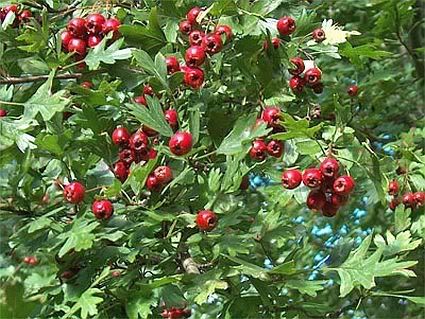
NAME : HAWTHORN
GAELIC NAME : SCEACH
LATIN NAME : Crataegus oxyacantha.
COMMON / FOLK NAMES : English Hawthorn May bush May tree Quickset Thorn-apple tree Whitethorn Bread and Cheese Tree Gaxels Hagthorn Halves Haw Hazels Huath Ladies' Meat May Mayblossom May Bush Mayflower Quick Thorn Tree of Chastity
MEDICINAL PART : Flowers Fruit
PLACES OF ORIGIN : Ireland Europe
HABITAT : Mountainous regions. Damp limey soils.
DESCRIPTION : The hawthorn grows as either a shrub or a tree in Ireland & Europe. In Ireland & England it is widely grown as a hedge plant. It trunk or stems have hard wood, smooth and ash-gray bark, and thorny branches. The small, shiny leaves are dark green on top, light bluish-green underneath, and have three irregularly toothed lobes.
FLOWERING PERIOD : The white flowers have round petals and grow in terminal corymbs during May and June. The fruit, or haw, is a 2- to 3-seeded, fleshy pome, scarlet on the outside, yellowish and pulpy on the inside.
PROPERTIES : Antispasmodic Cardiac Sedative Vasodilator
Medical Properties of Irish Herbs, Trees & Fungi
MAGICAL PROPERTIES
GENDER : Masculine
PLANET : Mars
ELEMENT : Fire
CELTIC GODS : Manannan Mac Lír Lír Nechtan
CELTIC GODDESS : Áine Brigit Grian
POWERS : Fertility Chastity Fishing Magic Happiness
CELTIC MONTH : April
OGHAM LETTER : H huath
RITUAL USES
Hawthorn was once used to decorate May poles. At one time hawthorns were believed to be Witches who had transformed themselves into trees. Witches have long danced and performed their rites beneath the thorn.
MAGICAL USES
Hawthorn has long been used to increase fertility. Because of this power it is incorporated into weddings, especially those performed in the spring. Call on the Goddess Áine or the Goddess Brigit while holding a hawthorn branch or wand of hawthorn to increase fertility.
Fishermen should carry some hawthorn and call on the Gods Manannan and Lír if fishing at sea, or Nechtan if fishing inland.
The leaves, curiously enough, are also used to enforce or maintain chastity or celibacy. The leaves are placed beneath the mattress or around the bedroom for this purpose.
Worn or carried it promotes happiness in the troubled, depressed, or sad. Call on the Goddess Grian to bring some sunshine and happiness into your life.
Hawthorn protects against lightning, and in the house in which it resides, no evil ghosts may enter. It is also powerful for protecting against damage to the house from storms.
In the past most Witch's gardens contained at least one Hawthorn hedge.
Care must be taken to propitiate the tree itself before removing any branches. It is important not to damage the tree and certain sacred trees should not be disturbed at all, lest their guardian spirits become angered.
Hawthorn trees standing alone should be avoided. Take parts only from trees that are part of boundary hedges.
The Hawthorn is sacred to the fairies, and is part of the fairy-tree triad of IRELAND and Britain: 'Oak, Ash and Thorn,' and where all three trees grow together it is said that one may see fairies.
Family: Rosaceae

Useful plant parts: Fruits and flowers
Description: Hawthorn is a plant that mostly comes in a form of moderately sized shrubs or small trees. It is known for the, usually, large number of flowers that are located on the tops of branches. For this plant it is also characteristic that it is whole covered with thorns. The leaves are relatively small, and from the upper side they are dark green colored, while on the lower side they have a light green color. The leaves have short petioles.
Collecting period and locations: The flowers are picked during full flowering (through May and June). Then they are rapidly dried in a warm and airy place. The dried material is usually stored in bottles that can be closed tightly. Medicinal substances are lost with time, and because of that, dried flowers are usually not stored for longer than one year. As for the fruits, they are picked when they are mature (the fruits are mostly red colored). Fruits are dried the same way as the flowers, and they also lose medicinal substances slowly with time. Regarding locations where to search, hawthorn can be found in thickets and hedges, in deciduous, and even in pine forests.
Medicinal properties and applications: Hawthorn is known as an excellent cure for heart problems, where it is useful for a number of problems related to heart and circulatory system. In elderly people it strengthens the heart, stimulates and nurtures it. It is also excellent for the mitigation of degenerative effects on the heart muscles, poor circulation and heart palpilations. It can also treat a too low or a too high blood pressure (in both cases, it normalizes pressure to a certain extent). Also, it is often recommended after a heart attack because it helps by increasing blood flow through coronary arteries and it overall increases activity and better nutrition of the heart muscle cells.Active compounds: Flavonoids, loline, acetylcholine, ethylamine and triterpenes.
Recipe: Tea of hawthorn can be prepared by taking two teaspoons full of dried hawthorn flowers and adding them to about 1/4 liters of boiling water and leaving the tea that way for 20-30 minutes. Usually one should drink 2-3 cups of this tea a day.
NAME : HAWTHORN
GAELIC NAME : SCEACH
LATIN NAME : Crataegus oxyacantha.
COMMON / FOLK NAMES : English Hawthorn May bush May tree Quickset Thorn-apple tree Whitethorn Bread and Cheese Tree Gaxels Hagthorn Halves Haw Hazels Huath Ladies' Meat May Mayblossom May Bush Mayflower Quick Thorn Tree of Chastity
MEDICINAL PART : Flowers Fruit
PLACES OF ORIGIN : Ireland Europe
HABITAT : Mountainous regions. Damp limey soils.
DESCRIPTION : The hawthorn grows as either a shrub or a tree in Ireland & Europe. In Ireland & England it is widely grown as a hedge plant. It trunk or stems have hard wood, smooth and ash-gray bark, and thorny branches. The small, shiny leaves are dark green on top, light bluish-green underneath, and have three irregularly toothed lobes.
FLOWERING PERIOD : The white flowers have round petals and grow in terminal corymbs during May and June. The fruit, or haw, is a 2- to 3-seeded, fleshy pome, scarlet on the outside, yellowish and pulpy on the inside.
PROPERTIES : Antispasmodic Cardiac Sedative Vasodilator
Medical Properties of Irish Herbs, Trees & Fungi
MAGICAL PROPERTIES
GENDER : Masculine
PLANET : Mars
ELEMENT : Fire
CELTIC GODS : Manannan Mac Lír Lír Nechtan
CELTIC GODDESS : Áine Brigit Grian
POWERS : Fertility Chastity Fishing Magic Happiness
CELTIC MONTH : April
OGHAM LETTER : H huath
RITUAL USES
Hawthorn was once used to decorate May poles. At one time hawthorns were believed to be Witches who had transformed themselves into trees. Witches have long danced and performed their rites beneath the thorn.
MAGICAL USES
Hawthorn has long been used to increase fertility. Because of this power it is incorporated into weddings, especially those performed in the spring. Call on the Goddess Áine or the Goddess Brigit while holding a hawthorn branch or wand of hawthorn to increase fertility.
Fishermen should carry some hawthorn and call on the Gods Manannan and Lír if fishing at sea, or Nechtan if fishing inland.
The leaves, curiously enough, are also used to enforce or maintain chastity or celibacy. The leaves are placed beneath the mattress or around the bedroom for this purpose.
Worn or carried it promotes happiness in the troubled, depressed, or sad. Call on the Goddess Grian to bring some sunshine and happiness into your life.
Hawthorn protects against lightning, and in the house in which it resides, no evil ghosts may enter. It is also powerful for protecting against damage to the house from storms.
In the past most Witch's gardens contained at least one Hawthorn hedge.
Care must be taken to propitiate the tree itself before removing any branches. It is important not to damage the tree and certain sacred trees should not be disturbed at all, lest their guardian spirits become angered.
Hawthorn trees standing alone should be avoided. Take parts only from trees that are part of boundary hedges.
The Hawthorn is sacred to the fairies, and is part of the fairy-tree triad of IRELAND and Britain: 'Oak, Ash and Thorn,' and where all three trees grow together it is said that one may see fairies.
Family: Rosaceae
Useful plant parts: Fruits and flowers
Description: Hawthorn is a plant that mostly comes in a form of moderately sized shrubs or small trees. It is known for the, usually, large number of flowers that are located on the tops of branches. For this plant it is also characteristic that it is whole covered with thorns. The leaves are relatively small, and from the upper side they are dark green colored, while on the lower side they have a light green color. The leaves have short petioles.
Collecting period and locations: The flowers are picked during full flowering (through May and June). Then they are rapidly dried in a warm and airy place. The dried material is usually stored in bottles that can be closed tightly. Medicinal substances are lost with time, and because of that, dried flowers are usually not stored for longer than one year. As for the fruits, they are picked when they are mature (the fruits are mostly red colored). Fruits are dried the same way as the flowers, and they also lose medicinal substances slowly with time. Regarding locations where to search, hawthorn can be found in thickets and hedges, in deciduous, and even in pine forests.
Medicinal properties and applications: Hawthorn is known as an excellent cure for heart problems, where it is useful for a number of problems related to heart and circulatory system. In elderly people it strengthens the heart, stimulates and nurtures it. It is also excellent for the mitigation of degenerative effects on the heart muscles, poor circulation and heart palpilations. It can also treat a too low or a too high blood pressure (in both cases, it normalizes pressure to a certain extent). Also, it is often recommended after a heart attack because it helps by increasing blood flow through coronary arteries and it overall increases activity and better nutrition of the heart muscle cells.Active compounds: Flavonoids, loline, acetylcholine, ethylamine and triterpenes.
Recipe: Tea of hawthorn can be prepared by taking two teaspoons full of dried hawthorn flowers and adding them to about 1/4 liters of boiling water and leaving the tea that way for 20-30 minutes. Usually one should drink 2-3 cups of this tea a day.
Friday, September 9, 2011
"Black Eyed Susan"

The Black Eyed Susan(Rudebekia) is an easily recognizable plant native to most of North America. It most often grows in moist thickets or fields. It can reach a height of around 3 feet, and has alternate, mostly basal leaves 4 to 8 inches long, covered by coarse hair. The Black Eyed Susan flowers from June to October. The familiar yellow ray florets circling a brown or black, domed center, makes it a plant that is easily distinguished.
The roots but not seedheads of the Black Eyed Susan can be used much like the related Purple Coneflower. It is an astringent used as in a warm infusion as a wash for sores and swellings.
Black Eyed Susan
Black Eyed Susan
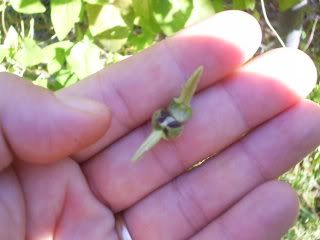
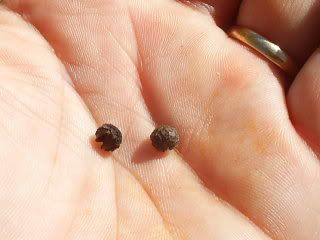
The Ojibwa used it as a poultice for snake bites and to make an infusion for treating colds and worms in children. The plant is diuretic and was used by the Menominee and Potawatomi. Juice from the roots had been used as drops for earaches. The spring greens can be cooked and eaten.
Wednesday, August 31, 2011
Making A Poultice
Poultice Making is sometimes thought of as granny medicine and not really something that is done any longer. That is not really the case, though. The concept remains fairly prominent in modern medicine.
I’ve noticed that many people interchange the use of the terms “poultice” and “compress”. My understanding of these two terms is that one applies the herbal mixture directly to the skin when making a poultice, although sometimes it is wise to protect the skin with a thin layer of cheese cloth or muslin. Compresses are usually made by soaking a clot in an infusion and applying these cloths to the skin. I will put something together on the uses of compresses at a later date. I’ve put together a poultice/compress kit in which I keep the following materials:
My Poultice/Compress Kit
Sterile cotton and flannel and wash cloths.
Wool sweater ribbing cut from old sweaters.
Bedding protectors such as an old flannel lined plastic table cloth.
Hot water bottle and covers.
Old hosiery
You will also want to have clay and finely ground flour ( I like rice flour) on hand but I keep these in glass containers in my herb closet. I have large tongue depressors for spreading poultices in my first aid kit.
Traditionally poultices were used to soothe, warm or to draw. The poultice is prepared, spread on the affected area and then covered with a thin piece of cotton. I wrap an outer cloth around this area to hold the poultice in place. The wool ribbing works very well for warming poultices because it holds in the heat.
The simplest of poultices is prepared by simply grinding up the fresh herb, spreading it on a gauze pad or piece of flannel and applying it to the area where it is needed. For example, when I cut myself, I grind up yarrow and apply it directly to the cut. The astringency will stop bleeding and help the injury to seal itself shut. Plantain leaves work very well to draw out splinters and when trying to soothe insect bites.
A soothing poultice helps with itchy rashes or skin irritations, such as rashes or hives. They can also help to reduce inflammation and encouraging healing. In the Gladstar course, we learned to mix two parts cooling , demulcent herbs to one part relaxing herb. Comfrey root and leaf juice are my hands down favorite demulcents to use. In the fall, I preserve comfrey poultices by juicing comfrey leaves and mixing in dried comfrey root to form a thick paste. Then, I spread this mixture on squares of cotton muslin, cover it with another flash freeze. These work well when you want to apply initial cold to a bruise or a sprain to stop swelling. I also freeze comfrey leaf juice in ice cubes trays and then store the cubes freezer containers to be used in warming poultices. For relaxing herbs, I like to use borage because it also has cooling properties or lavender as it is an analgesic.
A warming poultice is used to bring heat to an area to encourage circulation and or to relax muscles. They can work very well in relaxing muscle spasms. They often include ingredients like mustard powder or cayenne powder. I often just mix 1/t part mustard and 1/2 part cayenne to three parts rice flour, then mix in enough water to make a paste.
A drawing poultice is often a mixture of herbs and clay and cold water; which when applied to splinters or insect bites will help to draw out foreign objects. I often use tinctures or liniments in drawing poultices, as well.
I make a drying poultice which is basically a cold, drawing poultice. I always make these with clay and liniment and use them to dry up itchy , oozing rashes such as poison ivy. These should never be warm because heat may spread the rash due to the fact that the oils become more fluid when they are warm.
Sometimes when we are out camping and I am away from my larger supply of herbs, I cheat and make poultices out of the liniments and tinctures I keep in my portable first aid kit, poured on a gauze pad.
The only thing left to discuss is temperature. You can figure out what temperature to use by using some common sense. Heat expands and draws energy so a very hot poultice might bring an infection to a head or draw blood to an area to increase healing. I would use heat to draw out a splinter. Heat also relaxes so it works well to relieve cramped, sore muscles or back spasms.
Cold constricts, slowing the inflammation process, so you might want to use it to stop burning or swelling. Once that has stopped, you can always apply a warmer healing poultice. Physical trainers often recommend alternating between cold and hot when dealing with injuries, anyway.
Sunday, August 14, 2011
Solomons Seal
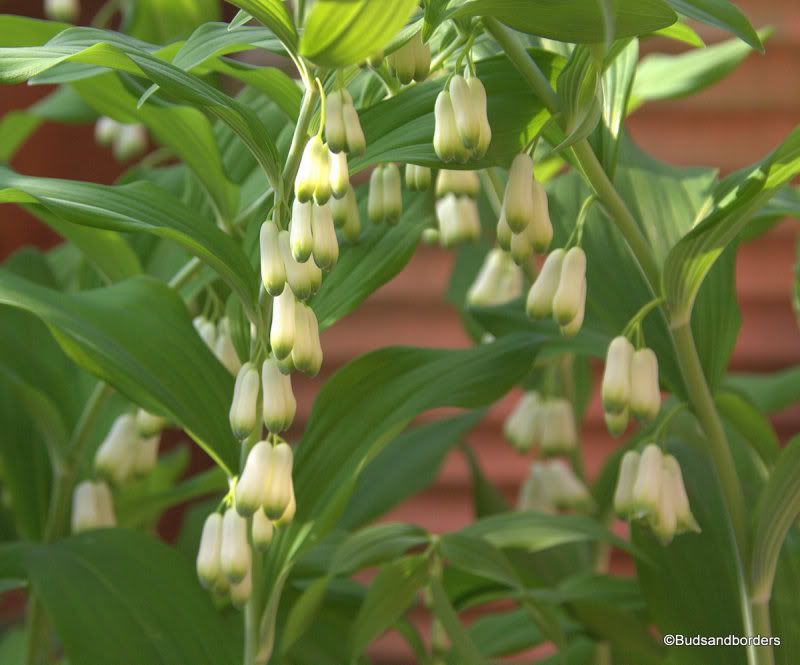
Solomon’s Seal
Polygonatum biflorum
Other Names: American Solomon's Seal, King Solomon's Seal, King Solomon's-seal, Small Solomon's Seal, Lady's Seals. St. Mary's Seal.
Habitat
Perennial native herb found growing in moist sandy, loamy or rocky woods and thickets, N. America from New Brunswick to Michigan, south to Tennessee and Florida. Cultivation: a very hardy plant, it prefers a light soil and a shady situation. Seeds, or transplants, if taken up with plenty of soil. The creeping root, rhizome, or underground stem, is thick and white, twisted and full of knots, with large circular scars at intervals, these scars give Solomon's Seal it's name. Stems grow to a height of from 18 inches to 2 feet, or even more and bend over gracefully. Large, light green, and broad ovate leaves grow alternately on the stem, clasping it at the bases. The flowers are tubular, succulent and thick, light yellow- green, and hang in little drooping clusters of two to five, growing from the leaf axils. Flowers bloom April to June. The fruit is a small berry about the size of a pea, blackish-blue, fruit is not edible, said to be poisonous. Gather roots in fall as flows fade, dry for later herb use.
Properties
Solomon's Seal is edible and medicinal, the young edible shoots are an excellent vegetable when boiled and eaten like Asparagus. The root is edible after boiling in three changes of water or sun baked, and is a good source of starch. This herb has a long history of use in alternative medicine dating back to the time of Dioscorides and Pliny. The main constituents are saponins (similar to diosgenin), flavonoids, and vitamins. A medicinal infusion of root or rhizome, is used in alternative medicine as an astringent, demulcent, and tonic. The dried herb is taken as a laxative and restorative, and is good in inflammations of the stomach, indigestion, profuse menstruation, lung ailments, general debility, bowels, piles, and chronic dysentery. A medicinal poultice of the fresh roots is said to fade bruises, also applied to cuts and sores.
Folklore
Once believed to have aphrodisiac properties, and used in love potions. More than likely due to its ability to stop profuse menstruation. Gerard says: 'The roots of Solomon's Seal, stamped while it is fresh and greene and applied, taketh away in one night or two at the most, any bruise, blacke or blew spots gotten by falls or women's wilfulness in stumbling upin their hastie husband's fists, or such like.'
Recipe
"Medicinal" tea: To 1 tsp. dried herb add 1 cup boiling water, steep for 10 min. sweeten to taste, take in the morning as laxative.
Sunday, July 24, 2011
Making Tinctures(and Dosage)

After posting so much I never know if I am repeating a similar post or not.
For those that dont know how to make a Tincture I will explain.
Making an Herb or Wild Plant Tinture.
You can make tinctures from fresh and dried roots as well as from fresh flowers and leaves.Tinctures Act Fast
Tinctures are alcohol-based plant medicines. Alcohol extracts and concentrates many properties from plants, including their poisons. Alcohol does not extract significant amounts of nutrients, so tinctures are used when we want to stimulate, sedate, or make use of a poison. (Remember that nourishing herbs are best used in water bases such as infusions and vinegars.)
The concentrated nature of tinctures allows them to act quickly.A little goes a long way.
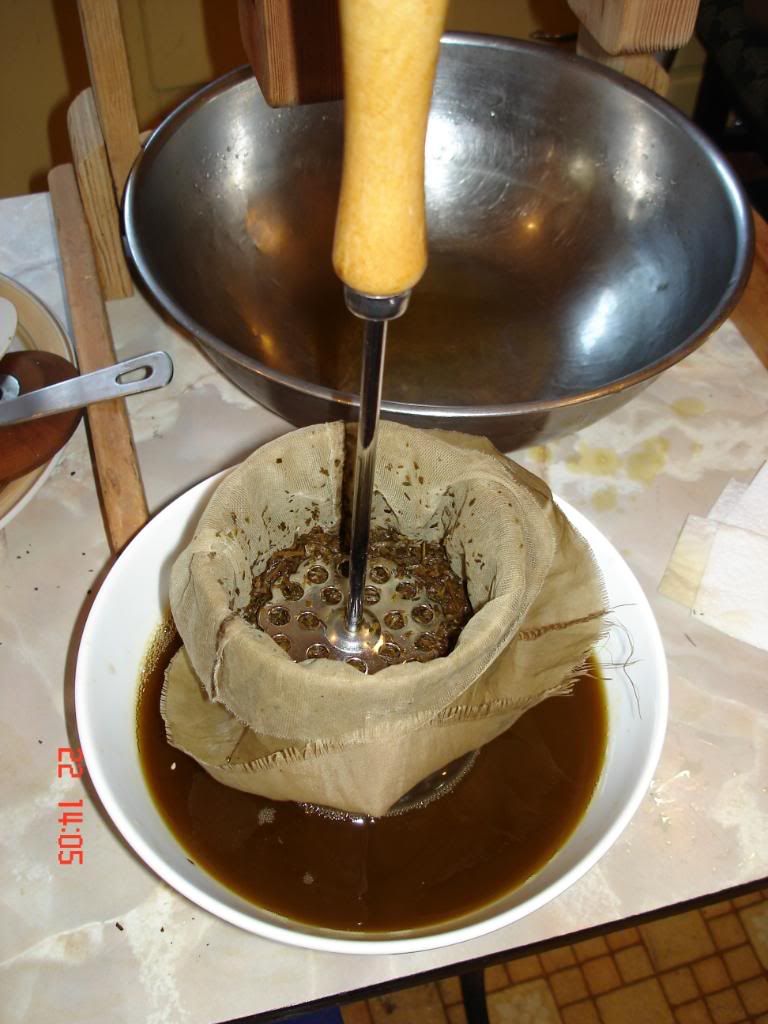
Making Dried Root Tinctures
I strongly prefer to make tinctures from fresh plants. But many people have a hard time getting fresh plants. Most books therefore ignore fresh plant tinctures and focus on making tinctures only from dried plants. The only dried plant parts I use to make tinctures are roots and seeds. All other plant parts I use fresh when making a tincture. And I actually prefer to use fresh roots too.
To make a tincture from dried roots:
Buy an ounce of dried Echinacea augustifolia or Panax ginseng root or better yet...Grow your own.
Put the whole ounce in a pint jar.
The dried root should fill the jar about a third full. If not, use a smaller jar.
Fill the jar to the top with the alcohol. Cap tightly and label.
Almost any alcohol can be used to make a tincture. My preference is 100 proof vodka. A lower proof, such as 80 proof, does not work nearly as well. Higher proofs, such as 198 proof or Everclear, can damage the liver and kidneys, so I don't use them to make medicine.
The tincture is ready in six weeks, but gets stronger the longer it sits. I like to wait about six months before using my ginseng tincture and a year before using my echinacea tincture.
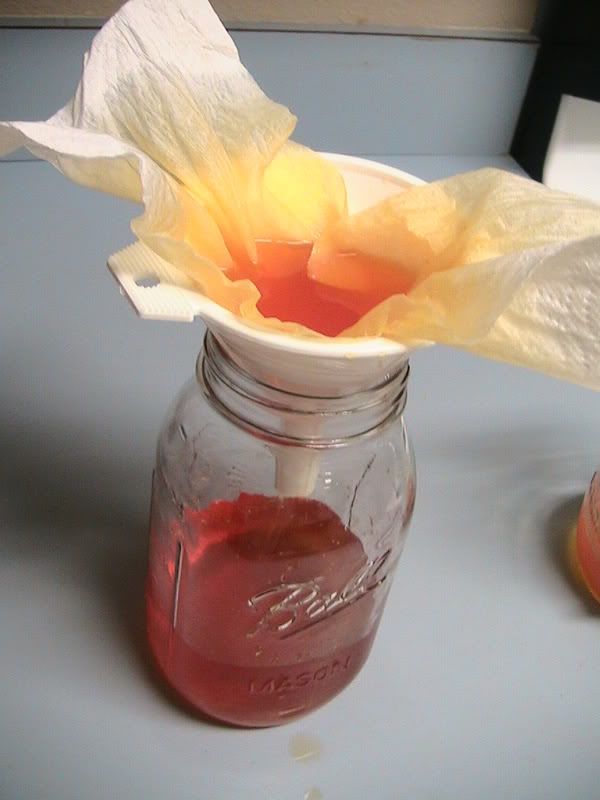
Making Fresh Root Tinctures
Roots generally hold their properties even when dried. But two of my favorite root tinctures must be made from fresh roots are the dried ones have lost much of their effect.
Making a tincture with a fresh root is similar to making one with a dried root.
With great respect for the plant, dig up its root.
Gently rinse mud away.
Chop root into small pieces and fill a jar to the top with the chopped root.
Fill jar to the top with alcohol. Cap tightly. Label.
Fresh root tinctures are ready to use in six weeks.
Making Fresh Leaf and Flower Tinctures
I use only fresh flowers and leaves in my tinctures. These delicate plant part lose aroma and medicinal qualities when dried.
Tinctures can be made from dried herbs, but I find them inferior in in both effect (how well they work) and energetics (how many fairies are in it), not to mention taste (how many volatile substances remain) and somatics (how something makes you "feel").
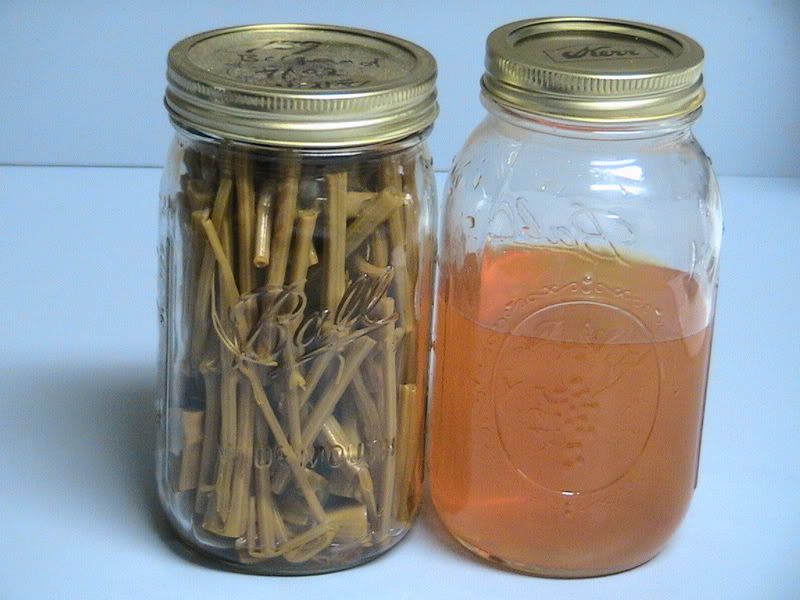
Plant Poisons
You remember that there are four types of poisons in plants: alkaloids, glycosides, essential oils, and resins. The first three are fairly easy to move from plants to a tincture.
Resins, because they "fear" water (hydrophobic) are difficult to tincture. When I want to tincture a resin I do use high proof alcohol. Some examples would be: pine resin tincture, balsam bud tincture, calendula flower tincture.
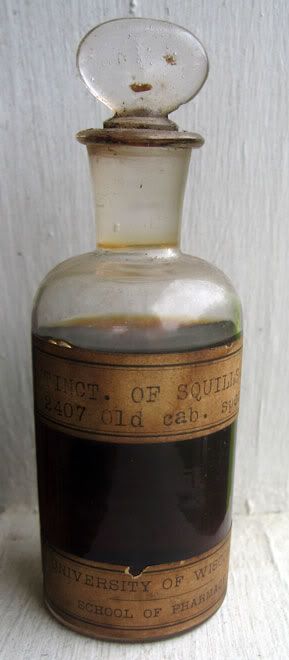
Taking Tinctures
I see many people put herbal tinctures under their tongues. I prefer to protect my oral tissues from the harsh, possibly cancer-causing, effects of the alcohol.
I dilute my tinctures in a little water or juice or even herbal infusion and drink them.
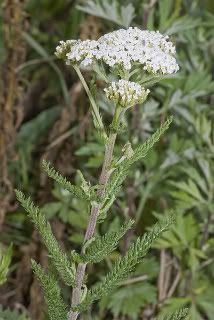
YARROW
Using Your Tinctures
Here are a few of the ways I use the tinctures in my herbal medicine chest. For more information on using these tincture, see my books and my website.
Acid indigestion: 5-10 drops of Dandelion root or Wormwood tincture every ten minutes until relieved. I use a dose of Dandelion before meals to prevent heartburn.
Bacterial Infections (including boils, carbuncles, insect bites, snake bite, spider bite, staph): 30-50 drops Echinacea or Yarrow tincture up to 5 times daily. For severe infections, add one drop of Poke tincture to each dose.
Colds: to prevent them I use Yarrow tincture 5-10 drops daily; to treat them, I rely on Yarrow, but in larger quantity, say a dropperful every 3-4 hours at the worst of the cold and tapering off.
Cramps during menstruation: 10 drops Motherwort every 20 minutes or as needed. Used also as a tonic, 10 drops daily, for the week before.
Cramps in muscle: 25 drops St Joan's every 25-30 minutes for as long as needed.
Cramps in gut: 5-10 drops Wormwood, once.
Diarrhea: 3 drops Wormwood hourly for up to four hours.
Energy lack: 10 drops of Dandelion or Ginseng tincture in the morning.
Fever: 1 drop Echinacea for every 2 pounds of body weight; taken every two hours to begin, decreasing as symptoms remiss. Or a dropperful of Yarrow tincture every four hours.
Headache: 25 drops St Joan's plus 3-5 drops Skullcap every 10-15 minutes for up to two hours. 5 drops of Skullcap may prevent some headaches.
High blood pressure: 25 drops of Motherwort or Ginseng tincture 2-4 times a day.
Hot Flashes: 20-30 drops Motherwort as flash begins and/or 10-20 drops once or twice daily.
Insect: prevent bites from black flies, mosquitoes, and ticks with a spray of Yarrow tincture; treat bites you do get with Yarrow tincture to prevent infection.
Nervousness, hysteria, hyper behavior: 15 drops Motherwort every 15-20 minutes.
Premenstrual distress: 10 drops Motherwort twice a day for 7-10 days preceding menstruation or 10 drops daily all month.
Sore throat: Gargle with Yarrow tincture.
Swollen glands: 1 drop Poke root tincture each 12 hours for 2-5 days.
Viral infections (including colds and the flu): 25 drops of St. Joan's wort tincture every two hours. Add one drop of poke root tincture 2-4 times a day for severe cases.
Wounds: I wash with Yarrow tincture, then wet the dressing with Yarrow tincture, too.
Tuesday, July 5, 2011
Blue Violet
Common Blue Violet (Viola papilionacea)This grows rampant in my neck of the woods.
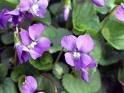
This is the most common species, with a sterile violet-colored flower that blooms in the spring. There are no leaves on the flower stalk. The heart-shaped, shallow-toothed leaves arise separately from the ground. They're good to eat in springtime, but become tough and coarse in the summer.
Poisonous dwarf larkspur (Delphinium tricorne) has a similar violet flower, but with a "spur" behind the flower, and a different leaf. Monkshood (Aconitum uncinatum), also poisonous, has a large, helmet-like upper sepal that covers 2 petals.
Violets grow in partially shaded spots in moist woods, and in meadows and gardens. They spread by underground rhizomes (which are toxic), creating dense stands of plants.
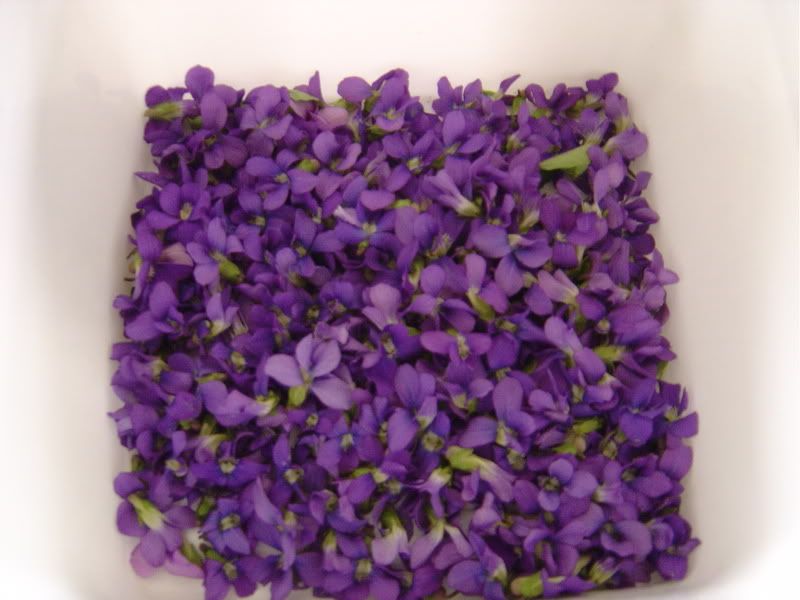
Sherbets usually contain water, sugar, and artificial flavors. This one, using natural thickeners and sweeteners, provides an especially rich setting for these luxuriant flowers.
4 cups water
1/4 cup grape seed or canola oil
1/4 cup vegetable glycerin
1/4 cup raw cashews
1?4 cup lecithin granules (available at health food stores
2 tbs. flaxseeds
2 tsp. liquid stevia
2 tsp. freshly grated orange rind
1/2 tsp. salt
2 cups violet flowers
1. PurÈe all ingredients except the violets in a blender.
2. Freeze in an ice cream machine according to the manufacturer's directions.
3. Stir in the violet flowers
Makes 5-1/2 cups
Preparation time: 20 minutes
White Violets are also edible.
Violets have been used medicinally for centuries. There is some speculation as to whether Violets and their extracts are useful in cancers and tumors, and an experiment done in 1960 allegedly resulted in a Violet extract damaging tumors in mice. Another story has it that a man with colon cancer was cured by eating Violet leaves, but apparently he had to eat a 1,600 square foot nursery bed of them to get this effect.
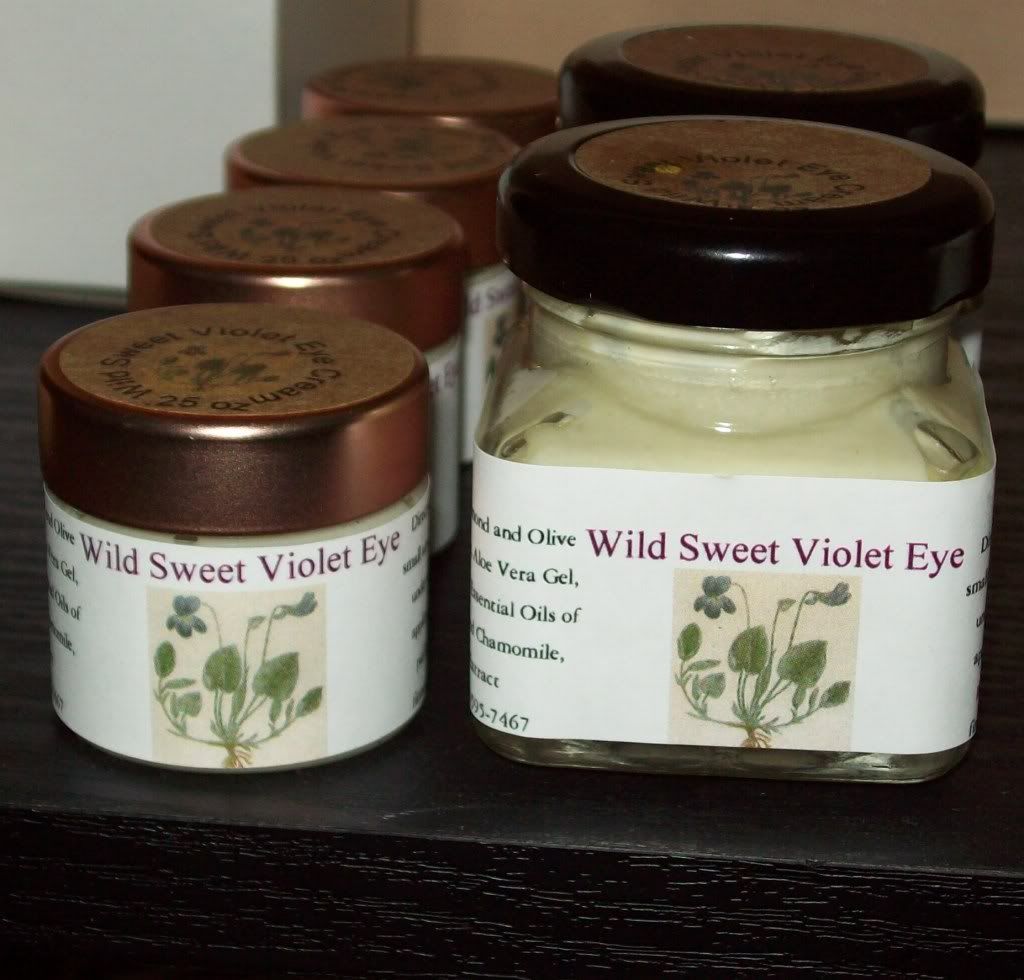
The leaves and flowers of Violets do have expectorant properties, and work well in cases of respiratory disorders such as bronchitis, colds, and coughs. One recipe calls for 1 tablespoon of Oil in a cup of water to be sipped slowly four times a day. Alternatively, making a Tea to use as a gargle, or making a syrup by adding honey to thicken the tea are also valid ways to use this plant to combat these symptoms. Ingesting a tea made of violet leaves is reportedly also effective as a laxative and for insomnia, and there are reports in the literature that Violets contain an aspirin-like substance that in a tea may be helpful in reducing the symptoms of hangovers. This aspirin-like effect has also been reported as being effective externally in reducing headache and neck pain. Pound the leaves into a paste, adding water and oatmeal as needed, then apply to a warm compress and place on the back of the neck. This also works for the pain of rheumatism when applied to the affected area. Capsules can be made for internal use by pulverizing the leaves and making a powder.
Violets have antiseptic properties that may be helpful in relieving symptoms of various skin eruptions and sores when made into an Ointment and applied as needed.
Wonderful for eye and face creams.

Although it is reported that ingesting large quantities of Violet seed may cause vomiting, these plants are safe, and as such are a good plant for the inexperienced herbalist to use for experimentation.
This is the most common species, with a sterile violet-colored flower that blooms in the spring. There are no leaves on the flower stalk. The heart-shaped, shallow-toothed leaves arise separately from the ground. They're good to eat in springtime, but become tough and coarse in the summer.
Poisonous dwarf larkspur (Delphinium tricorne) has a similar violet flower, but with a "spur" behind the flower, and a different leaf. Monkshood (Aconitum uncinatum), also poisonous, has a large, helmet-like upper sepal that covers 2 petals.
Violets grow in partially shaded spots in moist woods, and in meadows and gardens. They spread by underground rhizomes (which are toxic), creating dense stands of plants.
Sherbets usually contain water, sugar, and artificial flavors. This one, using natural thickeners and sweeteners, provides an especially rich setting for these luxuriant flowers.
4 cups water
1/4 cup grape seed or canola oil
1/4 cup vegetable glycerin
1/4 cup raw cashews
1?4 cup lecithin granules (available at health food stores
2 tbs. flaxseeds
2 tsp. liquid stevia
2 tsp. freshly grated orange rind
1/2 tsp. salt
2 cups violet flowers
1. PurÈe all ingredients except the violets in a blender.
2. Freeze in an ice cream machine according to the manufacturer's directions.
3. Stir in the violet flowers
Makes 5-1/2 cups
Preparation time: 20 minutes
White Violets are also edible.
Violets have been used medicinally for centuries. There is some speculation as to whether Violets and their extracts are useful in cancers and tumors, and an experiment done in 1960 allegedly resulted in a Violet extract damaging tumors in mice. Another story has it that a man with colon cancer was cured by eating Violet leaves, but apparently he had to eat a 1,600 square foot nursery bed of them to get this effect.
The leaves and flowers of Violets do have expectorant properties, and work well in cases of respiratory disorders such as bronchitis, colds, and coughs. One recipe calls for 1 tablespoon of Oil in a cup of water to be sipped slowly four times a day. Alternatively, making a Tea to use as a gargle, or making a syrup by adding honey to thicken the tea are also valid ways to use this plant to combat these symptoms. Ingesting a tea made of violet leaves is reportedly also effective as a laxative and for insomnia, and there are reports in the literature that Violets contain an aspirin-like substance that in a tea may be helpful in reducing the symptoms of hangovers. This aspirin-like effect has also been reported as being effective externally in reducing headache and neck pain. Pound the leaves into a paste, adding water and oatmeal as needed, then apply to a warm compress and place on the back of the neck. This also works for the pain of rheumatism when applied to the affected area. Capsules can be made for internal use by pulverizing the leaves and making a powder.
Violets have antiseptic properties that may be helpful in relieving symptoms of various skin eruptions and sores when made into an Ointment and applied as needed.
Wonderful for eye and face creams.
Although it is reported that ingesting large quantities of Violet seed may cause vomiting, these plants are safe, and as such are a good plant for the inexperienced herbalist to use for experimentation.
Friday, June 24, 2011
Skunk Cabbage
DESCRIPTION: This entire plant smells like a skunk when injured (hence the specific name, foetidusóstinking)ógreat to show kids, always eager to be repulsed!
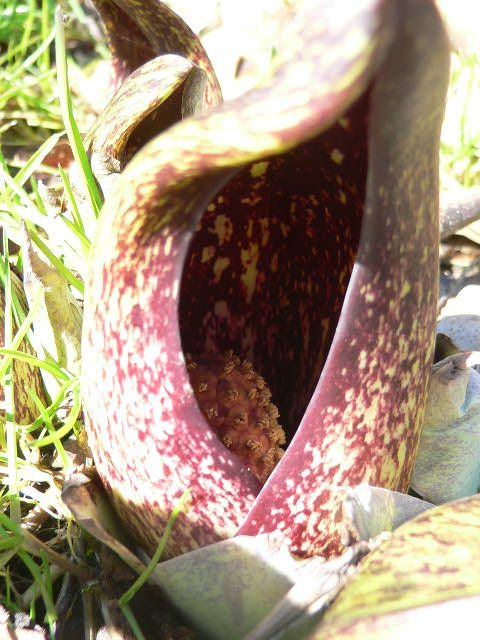
The flower, which appears in late winter before the leaves, features a stalked, elliptoid, pale pink spadix (the reproductive part) about 1 inch long, studded with small yellow flowers, and partially shielded by a mottled, purple and green, long-oval spathe, 3 to 6 inches tall. It generates enough heat to melt the surrounding snow, while the odor attracts the yearís first flies to this heated haven. They mate there and pollinate the flowers.
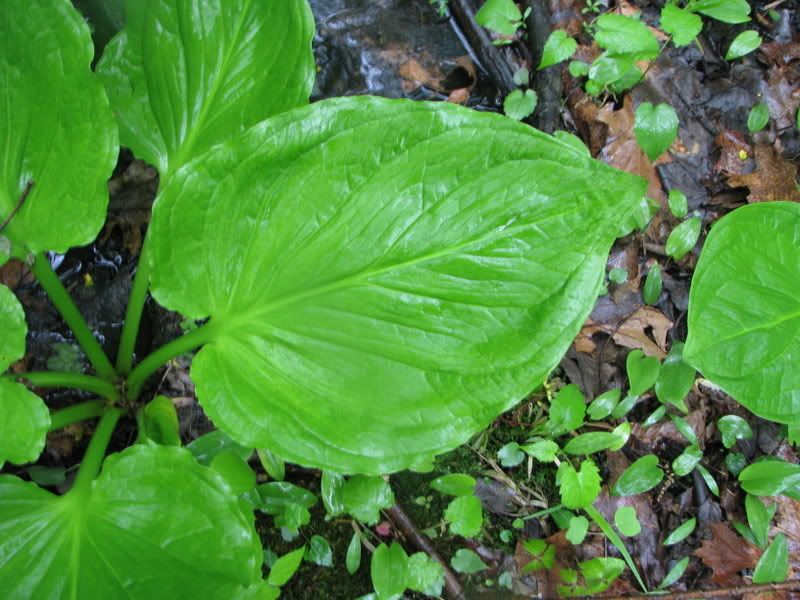
The smooth-edged, long-oval to heart-shaped leaves come up in March (sometimes also in late fall, when they complete their development). First wrapped like scrolls, they grow 1-1?2 to 3 feet tall and 1 to 2 feet long.
In mid-summer and fall, an inconspicuous, low, flattened, green, egg-shaped fruit, 2 to 3 inches across, its surface convoluted like a brain, appears in the mud, turning black as it matures. Inside, a circle of 10 to 14 roughly globular seeds lines the periphery.
Caution: Deadly false helleboreÝ(Veratrum viride) superficially resembles skunk cabbage, and the plants often grow side by side. Odorless, false hellebore leaves look pleated, with prominent parallel veins, while skunk cabbageís inconspicuous veins branch.
The leaves, which appear in early spring (they sometimes also appear in late fall, but don't complete their development) are first wrapped like a scroll.
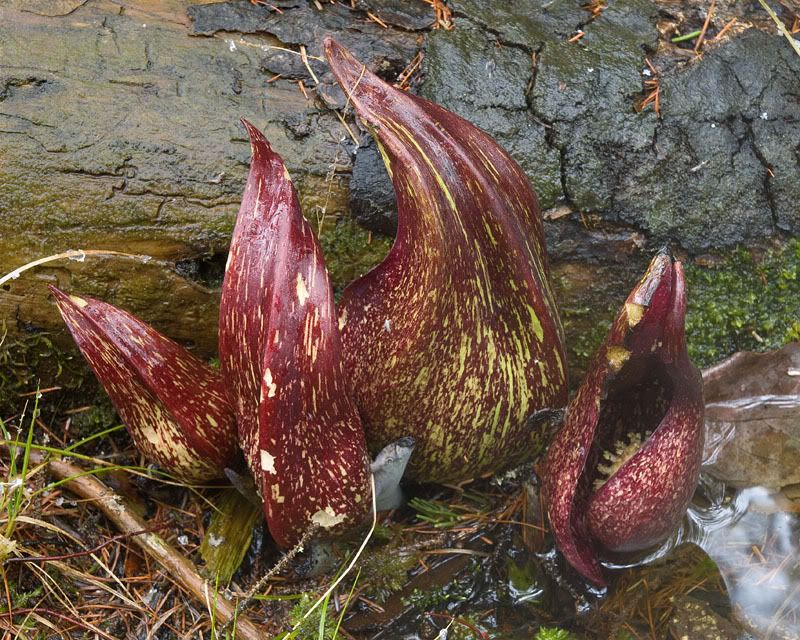
HABITAT: Skunk cabbage grows in large, dense stands in wet woods and swamps. And it grows in a certain area in eastern Asia too. Even though the 2 populations have been separated for 6 to 8 million years, the plantsí forms are identical, and they interbreed readily. For a long time, biologists couldnít figure out why they didnít evolve into 2 different species incapable of interbreeding in all that time.
It turns out that once a new species comes into existence, it remains unchanged for millions of years, through ice ages and hot climates, until it finally goes extinct. New species may branch off and evolve from an isolated pocket population of the parent species in as few as tens of thousands of years, only to continue unchanged for millions of years as well. And the stagnation of skunk cabbage in Asia and America (it does grow in swamps after all) supports this take on the scale of evolution's operation, and explains the conundrum.
MEDICINAL USES: An ointment made by boiling skunk cabbageÝroots in oil is said to be good for ringworm (a fungal infection of the skin), as well as sores and swellings.
I'd be willing to try this plant externally, but I'll let someone else swallow the tea made from the roots or seeds first. Such an infusion is supposedly antispasmodic, diaphoretic (inducing sweating and stimulating the immune system), and expectorant (bringing up phlegm), and it reputedly acts as a narcotic for asthma. It ís supposed to be good for arthritis, chorea, hysteria, edema, whooping cough, worms, epilepsy, and convulsions in pregnancy and labor (the Iroquois would pass the seeds over female genitals to bring on childbirth). I doubt that all these claims could be verified scientifically.
The flower, which appears in late winter before the leaves, features a stalked, elliptoid, pale pink spadix (the reproductive part) about 1 inch long, studded with small yellow flowers, and partially shielded by a mottled, purple and green, long-oval spathe, 3 to 6 inches tall. It generates enough heat to melt the surrounding snow, while the odor attracts the yearís first flies to this heated haven. They mate there and pollinate the flowers.
The smooth-edged, long-oval to heart-shaped leaves come up in March (sometimes also in late fall, when they complete their development). First wrapped like scrolls, they grow 1-1?2 to 3 feet tall and 1 to 2 feet long.
In mid-summer and fall, an inconspicuous, low, flattened, green, egg-shaped fruit, 2 to 3 inches across, its surface convoluted like a brain, appears in the mud, turning black as it matures. Inside, a circle of 10 to 14 roughly globular seeds lines the periphery.
Caution: Deadly false helleboreÝ(Veratrum viride) superficially resembles skunk cabbage, and the plants often grow side by side. Odorless, false hellebore leaves look pleated, with prominent parallel veins, while skunk cabbageís inconspicuous veins branch.
The leaves, which appear in early spring (they sometimes also appear in late fall, but don't complete their development) are first wrapped like a scroll.

HABITAT: Skunk cabbage grows in large, dense stands in wet woods and swamps. And it grows in a certain area in eastern Asia too. Even though the 2 populations have been separated for 6 to 8 million years, the plantsí forms are identical, and they interbreed readily. For a long time, biologists couldnít figure out why they didnít evolve into 2 different species incapable of interbreeding in all that time.
It turns out that once a new species comes into existence, it remains unchanged for millions of years, through ice ages and hot climates, until it finally goes extinct. New species may branch off and evolve from an isolated pocket population of the parent species in as few as tens of thousands of years, only to continue unchanged for millions of years as well. And the stagnation of skunk cabbage in Asia and America (it does grow in swamps after all) supports this take on the scale of evolution's operation, and explains the conundrum.

MEDICINAL USES: An ointment made by boiling skunk cabbageÝroots in oil is said to be good for ringworm (a fungal infection of the skin), as well as sores and swellings.
I'd be willing to try this plant externally, but I'll let someone else swallow the tea made from the roots or seeds first. Such an infusion is supposedly antispasmodic, diaphoretic (inducing sweating and stimulating the immune system), and expectorant (bringing up phlegm), and it reputedly acts as a narcotic for asthma. It ís supposed to be good for arthritis, chorea, hysteria, edema, whooping cough, worms, epilepsy, and convulsions in pregnancy and labor (the Iroquois would pass the seeds over female genitals to bring on childbirth). I doubt that all these claims could be verified scientifically.
Tuesday, June 21, 2011
Curly Dock
CURLY DOCK, YELLOW DOCK, (Rumex crispus)
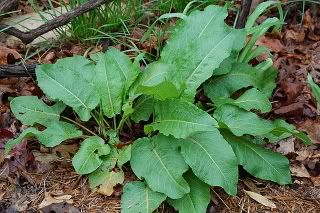
Long, lance-shaped, hairless leaves with very wavy margins radiating from a common center in early spring makes this species distinct. In mid-spring, curly dock grows one- to five-foot tall spikes encircled by dense clusters of tiny, inconspicuous, green flowers, giving way to dense clusters of hard, reddish fruit. It grows in fields, on disturbed soil, along roadsides, and near the seashore.
The highly nutritious, lemony flavored young leaves are excellent raw or cooked in early spring, as are the leaves on the flower stalk and the peeled flower stalk in mid-spring. People boil the long yellow taproot and drink the bitter tea to detoxify and to help liver or skin ailments.
Long, lance-shaped, hairless leaves with very wavy margins radiating from a common center in early spring makes this species distinct. In mid-spring, curly dock grows one- to five-foot tall spikes encircled by dense clusters of tiny, inconspicuous, green flowers, giving way to dense clusters of hard, reddish fruit. It grows in fields, on disturbed soil, along roadsides, and near the seashore.
The highly nutritious, lemony flavored young leaves are excellent raw or cooked in early spring, as are the leaves on the flower stalk and the peeled flower stalk in mid-spring. People boil the long yellow taproot and drink the bitter tea to detoxify and to help liver or skin ailments.
Saturday, October 23, 2010
Late Fall and Winter Foraging
As the winter storms are beginning to blow in the foragers year is definitely coming to a close, unless you are a hunter of course, but that is another path altogether... The plant energy has turned inwards now, withdrawn into the roots. Here it will slumber until reawakened in the spring when the first birds begin to sing the wake up call and the sun begins to thaw the frozen earth.
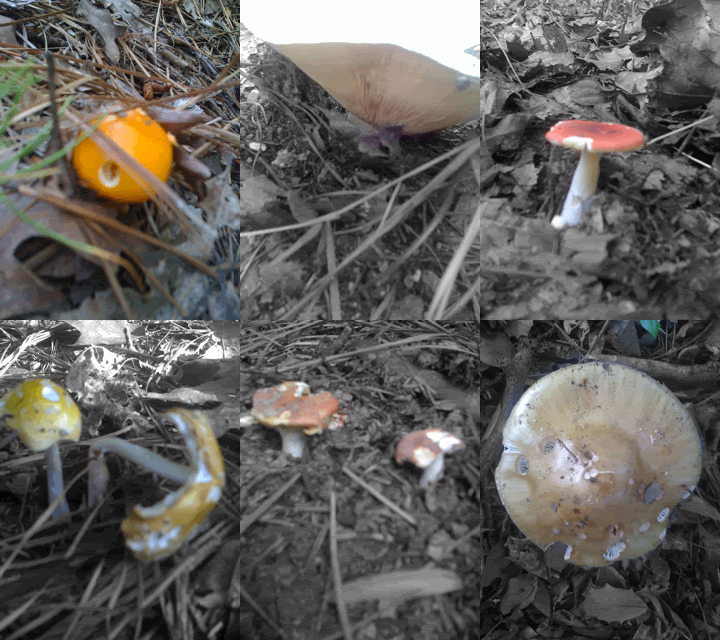
Those who live in a cold climate might be snowed under already, while those blessed with milder weather might enjoy the last warm days and still find nuts and mushrooms to add to a hearty autumn feast. Sitting around an open fire with one's friends and roasting sweet chestnuts (make sure the bottoms are slit or else they will explode on you) and sharing some home made elderberry wine with stories and laughter is a wonderful winter pastime. Walnuts are also still good for picking - lest the squirrels beat you to them. If you don't mind a more 'unusual' flavour, acorns might be worth a try, though they definitely need 'watering' in order to leech out the bitterness. Boil them with several changes of water and then roast them in the oven. Grind them to the consistency you like and try adding them to bread or cake mixes. They impart a very nutty flavour and a tasty little crunch.
In the milder regions mushrooms might still be popping up in the fields and woods until they are killed by the frost. Though before attempting to add wild mushroom species to your foraged dishes make absolutely certain that you have picked only the ones that are good to eat. Ask an expert. In some countries you can go to the pharmacy and ask for help with identification. Or try the local botanical gardens, agricultural extension service or botany department of your university. Join a mushroom foray to get expert instruction on identification and most importantly, how to recognize the poisonous species.
One mushroom that is easily identified even by the novice, is the common inkcap. Use the tall ones as a guide to the colony - while the older ones are not good to eat once their lamella turn pink, the babies are usually never far. Because of the high water content mushrooms often don't cook very well; instead, they simply melt away. However, a great way to prepare them is as fritters. Roll the mushrooms in flour, dip them in beaten egg, then roll them in bread crumbs and drop them into a hot frying pan with sizzling vegetable oil. This way their consistency remains largely intact and the crust adds a nice crunchiness to the experience.
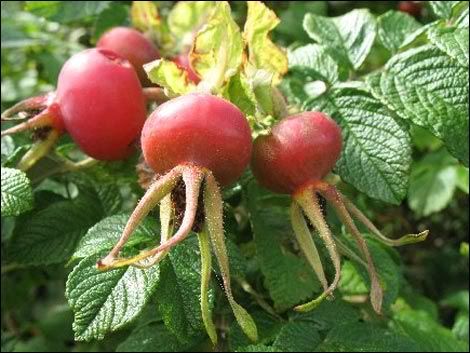
Also, now after the first frost has bitten it is a good time to pick rosehips, sloes, hawthorn berries and certain sorbus species. These fruits need to be bitten by the frost before they become really palatable. The rosehip fruits are soft now and can thus be processed much easier than in their early autumn rock-hard condition. Rosehips are very rich in vitamin C and are a great preventive remedy for winter ails. Process them quickly though, as they contain an enzyme, which will destroy the vitamin C as soon as the cut surfaces are exposed to the air.
Those who live in a cold climate might be snowed under already, while those blessed with milder weather might enjoy the last warm days and still find nuts and mushrooms to add to a hearty autumn feast. Sitting around an open fire with one's friends and roasting sweet chestnuts (make sure the bottoms are slit or else they will explode on you) and sharing some home made elderberry wine with stories and laughter is a wonderful winter pastime. Walnuts are also still good for picking - lest the squirrels beat you to them. If you don't mind a more 'unusual' flavour, acorns might be worth a try, though they definitely need 'watering' in order to leech out the bitterness. Boil them with several changes of water and then roast them in the oven. Grind them to the consistency you like and try adding them to bread or cake mixes. They impart a very nutty flavour and a tasty little crunch.
In the milder regions mushrooms might still be popping up in the fields and woods until they are killed by the frost. Though before attempting to add wild mushroom species to your foraged dishes make absolutely certain that you have picked only the ones that are good to eat. Ask an expert. In some countries you can go to the pharmacy and ask for help with identification. Or try the local botanical gardens, agricultural extension service or botany department of your university. Join a mushroom foray to get expert instruction on identification and most importantly, how to recognize the poisonous species.
One mushroom that is easily identified even by the novice, is the common inkcap. Use the tall ones as a guide to the colony - while the older ones are not good to eat once their lamella turn pink, the babies are usually never far. Because of the high water content mushrooms often don't cook very well; instead, they simply melt away. However, a great way to prepare them is as fritters. Roll the mushrooms in flour, dip them in beaten egg, then roll them in bread crumbs and drop them into a hot frying pan with sizzling vegetable oil. This way their consistency remains largely intact and the crust adds a nice crunchiness to the experience.
Also, now after the first frost has bitten it is a good time to pick rosehips, sloes, hawthorn berries and certain sorbus species. These fruits need to be bitten by the frost before they become really palatable. The rosehip fruits are soft now and can thus be processed much easier than in their early autumn rock-hard condition. Rosehips are very rich in vitamin C and are a great preventive remedy for winter ails. Process them quickly though, as they contain an enzyme, which will destroy the vitamin C as soon as the cut surfaces are exposed to the air.
Tuesday, October 19, 2010
Yellow Birch
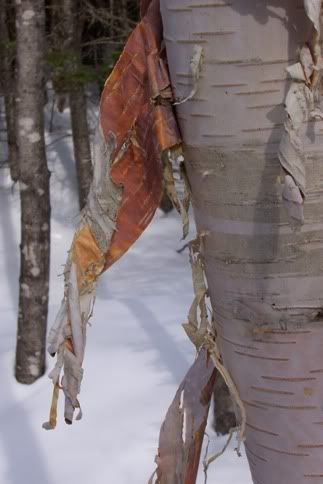
Food: Broken twigs of the Yellow birch (B. alleghaniensis) and Black or Sweet birch (B. Nigra) have a wintergreen fragrance. A sap can be collected and boiled down from Yellow birch. From Black birch harvest the twigs, red inner bark and larger roots. The inner bark can be boiled or ground into a flour. Twigs and inner bark can be steeped into a tea. Wintergreen flavor is stronger in Black birch.
Medicine: Chippewa made a medicine from Black and White birch (B. papyrifera) for stomach pain.

Technology: New England tribes used the bark of White or Paper Birch for many purposes. Large bark sheets were stripped from the tree in late spring to use as house coverings or to build canoes. Smaller pieces of bark were cut into patterns and used to make dishes and utensils, including seamless maple sap collecting dishes and maple sugar storage containers (makaks). The bark was also cut and folded to make baskets, fans and even tinder to fish by torchlight from canoes. Folding and biting single thin layers of the paper produced dental pictographs, or birch bark transparencies, that could be used for beadwork designs and patterns for other decorations.
Note: Indian legend surround the distinctive markings of the birch tree. The bark of this tree was never taken without acknowledgement its importance to Native Americans and without offering and thanks to the spirits that provide it. Read the Ojibwe story of Winnebojo & the Birch Tree. For additional information browse NativeTech's Uses of Birchbark.
Friday, October 1, 2010
Natural Beauty

Exactly when, where and our human obsession with 'beauty' started is hard to say. Fact is, it has been around for a very, very long time. Remains of ancient perfumes, potions and make up have been found in Egyptian tombs and uses of beauty products in classical Greek and Roman times are well documented. But even 'tribal societies' have a well established tradition of skin care and cosmetic uses, though they may be less apparent, when viewed from our modern perspective.
In modern society the aim and purpose of using such products seem primarily to consist of making our appearance more attractive to the opposite sex. In ancient times however, people sought to make themselves more appealing to beneficial Gods and spirits, or attempted to ward off nasty demons.
Beauty is an ephemeral quality and since its inception it has always been a moot point. Culture and fashion greatly influence what we perceive as beautiful. In ancient Greece for example an un-oiled body was thought to be offensive to Gods and humans alike and olive oil was extensively used to make the body smooth and shiny. In other societies animal grease, such as bear fat was used to achieve a similar effect, but on a spiritual level, it was also thought to transfer some of the animal's perceived powers.
perfume testing (22K)All over the world good smells were believed to attract the benevolence of helpful deities, while bad smells were always associated with the Gods of the underworld, harmful demons, or later, the devil. Thus, people soon adopted the many wonderful fragrances of herbs and flowers to serve their own purposes. Flower garlands, head wreaths and armbands were not only meant to look pretty but also send fragrant messages to the spirit world. Likewise, 'make up' and body paint was not only used to enhance physical beauty, but also to protect against the much feared evil eye and other harmful influences. The same thinking motivates indigenous tribal people, who use face and body paints to ward of natural and supernatural enemies. Originally, such paints often really had protective qualities as they were made from herbs, roots and clays with anti-bacterial or anti-fungal properties, but even in ancient times minerals were discovered and utilized for cosmetic purposes which actually caused more harm than good for those who wore them.
perfumebottles (16K)Today cosmetics, perfumes and skin care products constitute multimillion dollar industries, presenting a staggering array of choices to confuse the customer. Whether you are looking for shampoo, lotion, make up or perfume, the variety is overwhelming. Much of it is full of synthetic chemicals, mineral oils, preservatives, artificial fragrances and other junk food for the skin. Latest arrival on the high-end of this dazzling range of products are the 'natural skin care products', although on closer inspection one will actually find relatively few ingredients that resemble anything that you or I would deem natural. This is due to the fact that mass produced cosmetics need to be relatively sterile in order to extend their otherwise short-lived shelf-life - which can only be achieved by using certain preservatives or mineral oils.
The best natural cosmetics are home-made, using high quality vegetable oils and butters, such as coconut, avocado or almond oil, in combination with organic flower waters (hydrosols) and essential oils. They should always be produced in small batches to ensure freshness and purity. Making home-made cosmetics, tailored exactly to your own needs is fun and not all that difficult.
In the case of lotions and crèmes, the idea is to combine a proportion of oil with a proportion of liquid, with the help of an emulsifying agent. In the old days this emulsifying wax was derived from whales, but nowadays animals no longer have to suffer for our vanity. Jojoba oil has excellent emulsifying properties and other plant based emulsifiers can be produced in the laboratory.
egyptian (51K)Just which oils, waxes and other ingredients are chosen to create a specific crème or lotion, will determine its nutritional properties for the skin (see previous article on oils). Some oils are 'drying' while others are moisturizing. Combining these with humectants such as vegetable glycerine or aloe Vera gel produces varying consistencies and benefits for the skin. The trick, when blending crèmes is to have all ingredients at a similar temperature so as to avoid curdling, and to combine them slowly. If you have ever made mayonnaise from scratch you know what it takes to make lotion or crème. Apart from the emulsifying wax, which blends the watery and oily components together, you will also need a stabilizer, such as stearic acid, which is added in very small quantities, to give you product a stable consistency. However, use it sparingly or else your crème will become chalky instead of smooth.
For those who don't want to mess with oils and waxes there are now ready made base crèmes on the market. These generic crème bases can be enhanced by adding special ingredients such as essential oils, infused oils or Aloe Vera gel. However, they can only absorb a limited amount of additional ingredients before they become unstable, so experiment carefully. The quality of such crème bases varies widely and most contain preservatives or alcohol, which increases their shelf-life and makes them less vulnerable to turning into a breeding ground for bacteria and fungi. However, these chemicals are not all that great for the skin, so read the ingredients label carefully, and do your research. Making your own is definitely the best way to ensure highest quality. Producing only small batches means that you don't have to worry as much about shelf-life or bacteria, since your crème will probably be used up before it has had a chance to go rancid or mouldy.
Here is a basic recipe for a nice, light textured crème that is easy to make:
Base Crème
* 60 ml Rose Flower Water (hydrosol)
* 10 ml Apricot Oil
* 8 ml Jojoba Oil
* 8 ml Evening Primrose Oil
* 10g Shea Butter
* 8g Emulsifying Wax
* 2g Stearic Acid
Melt the Shea butter and oils at a low temperature in a double boiler. Pour into a bowl. Using a stick blender (alsoknown as 'magic wands') set at the highest speed, slowly add in the rosewater as you stir. The mixture will turn white and gooey. Add the emulsifying wax and stearic acid and keep beating until all is smooth and creamy. Finally, add essential oils of your choice (1-3% of total volume - but be sure to follow essential oil safety guidelines).
Often the emulsifying wax and stearic acid are of a consistency that requires you to return the mixture to the doubleboiler in order to melt them so they blend in. If you have to do this, do it before you add any essential oils. It is best to add the essential oils right at the end, when the crème base has cooled down to body temperatures, in order to avoid them 'flying off' with the heat - they are rather volatile, after all.
Which oils you'll want to use depends on your specific skin type. Some oils, particularly those that are high in unsaturated fatty acids (e.g. Evening Primrose, Hemp, Borage Seed oil) are usually only used in small quantities (10% of total amount), as nutritive additions, rather than as the main ingredient for your crème base. For a crème base stable oils, such as coconut, olive, almond or apricot oil are good. Some oils have a richer, thicker consistency than others. Experiment with different blends to find a combination that suits your skin type. You can also use infused oils, such as calendula infused oil, or St. John's Wort oil to add extra healing qualities. For the liquid portion plain distilled water will do, but hydrosols are nicer. Rosewater is slightly astringent, while Elderflower water is emollient and soothing and Orangewater is refreshing. Instead of shea butter you can also use cocoa butter for example. You can also add floral waxes, which are a by-product of essential oil production. However, they may contain traces of solvents.
Bath Salts
The cheapest and easiest method to create a home-made bath preparation is to use coarse salts, such as Epsom or Sea Salt. Crush to a grainy size (dissolves easier) and add a few drops of a gentle essential oil, such as rose, lavender or jasmine. Stir and blend well, fill in a jar and allow to macerate for a few days before use. Some people like to add food colouring to make it look more like the stuff you can buy at the store, but this is purely for looks. If you don't mind 'bits' floating in your bathtub you can add a handful of fresh fragrant rose petals or lavender flowers to the salt blend. The salt will dehydrate them and absorb their scent.
Bath Oil
Soaking in water for any length of times dehydrates the skin. Normally, the skin's natural oil secretions keep it from drying out, but frequent bathing and showering washes our natural protective layer off. You can replenish the lost oils by applying skin oils or lotions after each bath or shower, or you can use bathoils. Almond or coconut oil are good choices. Add some drops of essential oil for a beautiful scent and also add a little Turkey Red oil, which facilitates dispersion of the oil in your bath water.
If you don't like bath oils because they feel too greasy, but still want to add essential oils for the smell or for a specific therapeutic effect, you could try using plain milk (some people prefer goats milk), or cream as a dispersing carrier agent for your essential oils. A tiny blob of honey mixed in is also very nice and softening for the skin.
Hair Care
Making shampoo from scratch may be a bit ambitious, but there are certainly hair care products that can be made easily. These would better fit into the category of 'conditioner' though. A quick and easy conditioning can be made with Rosemary (dark hair) or Chamomile (blond hair). Just make an herbal infusion as if you were making a strong tea, steep until cooled off, strain and use as a rinse.
To nourish brittle and stressed hair, an oil pack is good, but be warned - this is a greasy affair. Jojoba oil or coconut oil is excellent for this treatment. Take a little oil and massage well into the hair. Cover with a plastic bag and leave in place for a while to allow the oils to really penetrate the hair. Wash out and rinse as usual. Don't overdo it with the oils though as it can be quite tricky to get all the oil out. Aloe Vera gel also makes a good conditioner. It can be diluted with a hydrosol or used neat. It has the added benefit of aiding skin conditions such as dandruff.
These are just a few suggestions. The scope for making your own natural skin and hair care products is only limited by your imagination. From simple to elaborate, anything is possible and you can be sure that whatever you make at home is much better for your skin than whatever you could buy at a store - and compared price-wise, high quality home made cosmetics, although requiring a certain minimum investment for equipment and materials, still work out much less expensive than top of the line commercially available natural cosmetics. And better still - if you make a little extra you'll always have beautiful gifts to share with your friends.
Note: Be aware that some essential oils can be highly irritating or cause allergic reactions in some individuals. Always investigate essential oils thoroughly before using them on your skin and only use them in dilution. It is best to test a dilution on a small area of the inner arm first, before applying them more generally. Furthermore, some essential oils (e.g. oils of the Citrus family) can increase the skin's sensitivity to the sun's rays, making it prone to burn more easily. Thus they should not be used on exposed skin during the summer months. Also, be especially cautious with essential oils during pregnancy.
Friday, August 20, 2010
"Stinging Nettle"
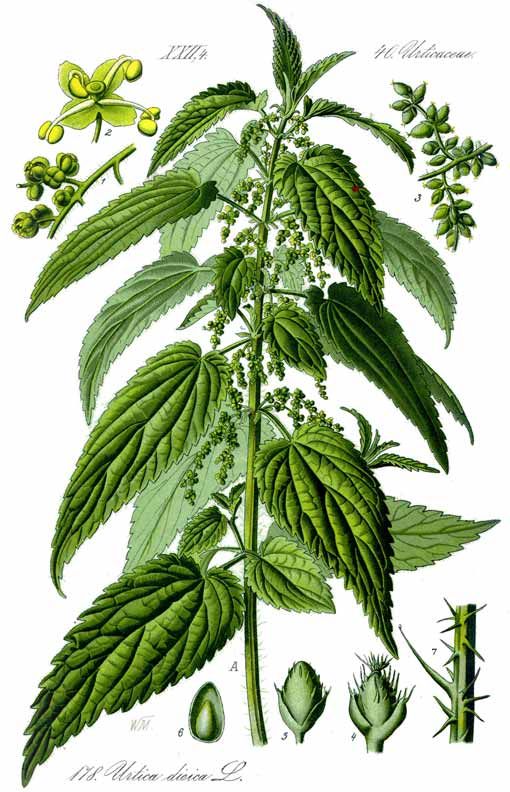
A surprising feature of herbal research is that it is seldom the rare, exotic, and beautiful plant that proves the most interesting; more often it is some common, familiar, and despised weed that it discovered to have undreamed of virtues. The common nettle is a good illustration.
Nearly everyone who has ever run barefoot as a child knows and hates this plant, but it is only a stinging acquaintance.
Nettles are common along roadsides, in waste places, and on vacant lots where barefoot children like to play, and when contacted by a bare ankle it causes a painful smarting followed by a red rash.
"All some want to know about nettles is how to get rid of them." This is the attitude that most people have toward this herb.
And yet, this detested weed is one of the finest and most nutritious foods in the whole plant kingdom. Unlike many health foods, nettle greens are really good, as well as being good for you.
In addition to their good taste, nettles are rich in vitamins A and C, amazingly high in protein, filled with chlorophyll, and probably exceedingly rich in many of the essential trace minerals.
No grazing animal will eat a live nettle, but when nettles are mowed and dried, all kinds of livestock eat them avidly and thrive on them. Horses get shinier coats and improve in health when fed dried nettles. Cows give more and richer milk when fed on nettle hay. Hens lay more eggs when powdered nettle leaves are added to their mash, and these eggs actually have a higher food value. Even the manure from nettle-fed animals is improved, and makes better fertilizer.

Nettles furnish one of the most valuable of all plant substances to use as a mulch in your garden, or to add to your compost pile. Having approximately seven percent nitrogen, figured on a dry-weight basis, this plant is richer in this essential nutrient than many commercial fertilizers.
Nettles are covered with tiny, nearly invisible stinging hairs that produce an intense, stinging pain, followed redness and skin irritation. The generic name comes from the Latin word, "uro," which means "I burn." Nevertheless, they're superb, non-stinging, cooked vegetables.
Nettles usually appear in the same places year after year. Look for them in rich soil, disturbed habitats, moist woodlands, thickets, along rivers, and along partially shaded trails.
They grow throughout most of the United States Here are a few of the most common species: Stinging nettle's (Urtica dioica) rather stout, ribbed, hollow stem grows 2-4 feet tall. The somewhat oval, long-stalked, dark green, opposite leaves are a few inches long, with a rough, papery texture, and very coarse teeth. The leaf tip is pointed, and its base is heart-shaped.
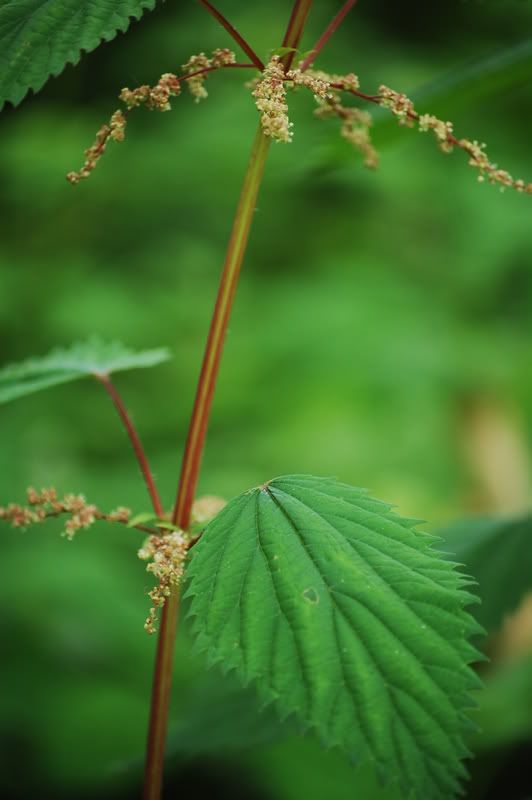
This is a dioecious plant, with male and female flowers growing on separate plants. The species name, dioica, means "two households" in Greek: By late spring, some plants have clusters of tiny, green female flowers, hanging from the leaf axils in paired strands.
You can eat the stems as well as the leaves of the very young plant.Collect nettle leaves before they flower in spring. They may be bad for the kidneys after they flower. New nettles come up in the fall, and you can pick them before they're killed by frost.
People have been using nettles for food, medicine, fiber, and dyes since the Bronze Age. Collect them using work gloves, and wear a long-sleeved shirt. If you happen upon nettles when you have no gloves, put your hand inside a bag. The young leaves are the best part of the plant. They come off most easily if you strip them counter-intuitively, from the top down.
Clean and chop nettles wearing rubber gloves. Once youíve cooked them a little, the stingers are deactivated, and the plant becomes wonderfully edible.
Nettles have a bad reputation as an unpleasant-tasting survival food in some circles. That's because people don't know how to prepare them. They often boil them, which is awful. Nettle leaves are good simmered in soups 5-10 minutes, but my favorite method is the waterless steaming method, recommended for spinach in a 1699 cookbook by John Evelyn, and described in the cooking section.
Enjoy nettles as a vegetable side-dish with rice and beans. Sometimes I make creamed nettlesómuch more satisfying than creamed spinach. Because nettles have the richest, hardiest taste of any green,you can combine them with lighter ingredients, such as celery, zucchini, lemon juice, or tomato sauce.
Dry nettles for winter use and tea.
As food, this tonic is good for rebuilding the system of chronically ill people. Nineteenth century literature is full of so-called constitutionally weak people, who usually die on the last page. In Russia, they were given freshly squeezed nettle juiceóa tonic loaded with iron and other nutrientsófor iron-deficiency anemia. This often worked.
Many of the benefits are due to the plant's very high levels of minerals, especially, calcium, magnesium, iron, potassium, phosphorous, manganese, silica, iodine, silicon, sodium, and sulfur. They also provide chlorophyll and tannin, and they're a good source of vitamin C, beta-carotene, and B complex vitamins. Nettles also have high levels of easily absorbable amino acids. They're ten percent protein, more than any other vegetable.
The substances in the stingers have medicinal uses: In the late 1980s, scientists studying the differences between dried and freeze-dried herbs accidentally discovered that freeze-dried nettles cured one of the researcher's hay-fever. Subsequently, a randomized double-blind study at the National College of naturopathic Medicine in Portland, Oregon showed that 58 percent of hay-fever sufferers given freeze-dried nettles rated it moderately to highly effective. Nettles are a traditional food for people with allergies.
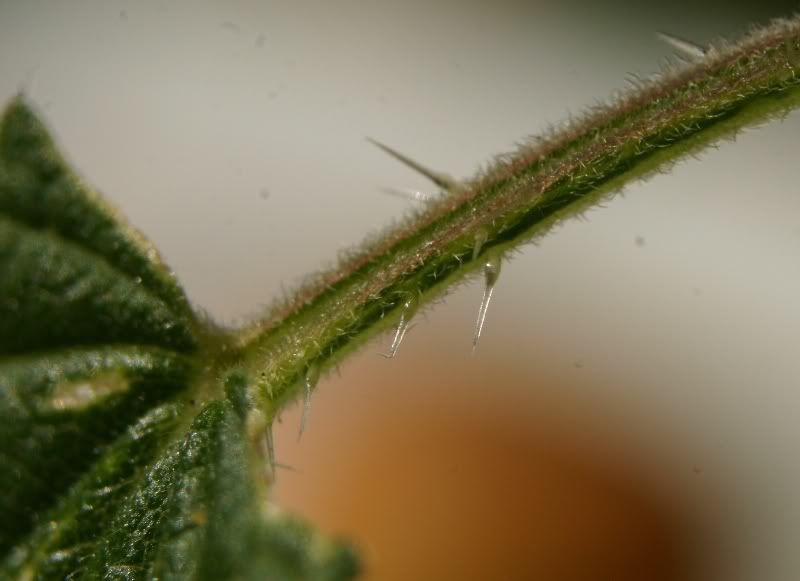
Nettles sting you because the hairs are filled with formic acid, histamine, acetylcholine, serotonin (5-hydroxytryptamine), plus unknown compounds. Some of these substances are destroyed by cooking, steeping, or drying, but not by freeze-drying or juicing. Unfortunately, you need a vacuum chamber to freeze-dry herbs. However, you can purchase freeze-dried nettles in capsules for hay-fever.
As an expectorant, it's recommended for asthma, mucus conditions of the lungs, and chronic coughs. Nettle tincture is also used for flu, colds, bronchitis and pneumonia.
Nettle infusion is a safe, gentle diureticóconsidered a restorative for the kidneys and bladder, and used for cystitis and nephritis. It ís also recommended for weight loss, but you may shed more pounds of water than fat.
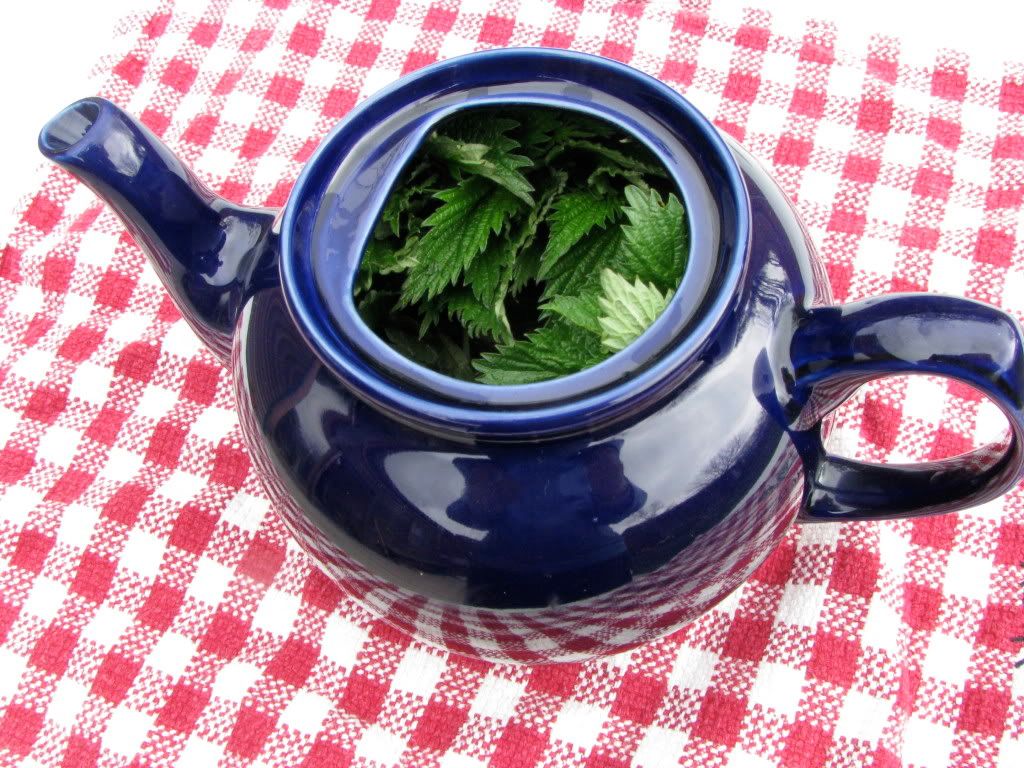
Nettle tea compress or finely powdered dried nettles are also good for wounds, cuts, stings, and burns. The infusion was also used internally to stop excessive menstruation, bleeding from hemorrhages, bloody coughs, nose bleeds, and bloody urine. It helps blood clot, but major bleeding is dangerousóindicative of a serious underlying condition. Consult a competent practitioner in such cases. Use for minor cuts.
Other uses include treating gout, glandular diseases, poor circulation, enlarged spleen, diarrhea, and dysentery, worms, intestinal and colon disorders, and hemorrhoids. Nettles are usually used along with other herbs that target the affected organs.
German researchers are using nettle root extracts for prostate cancer, and Russian scientists are experimenting with nettle leaf tincture for hepatitis and gall bladder inflammation.
Eating nettles or drinking the tea makes your hair brighter, thicker and shinier, and makes your skin clearer and healthierógood for eczema and other skin conditions. Commercial hair- and skin care products in health food stores often list stinging nettle as an ingredient. Nettles have cleansing and antiseptic properties, so the tea is also good in facial steams and rinses.
Nettles' long, fibrous stems were important in Europe for weaving, cloth-making, cordage, and even paper. Native Americans used them for embroidery, fish nets, and other crafts. You can even extract a yellow die from the roots.
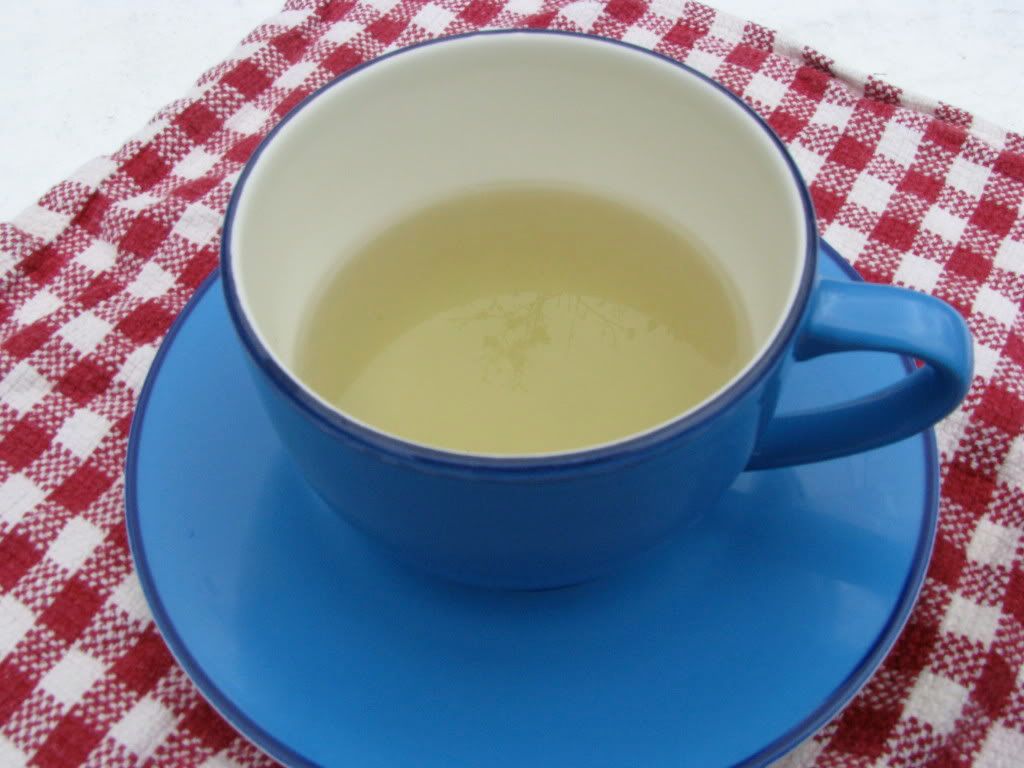
Nettle tea is given to house plants to help them grow, but the strangest use I've ever heard is for severe arthritis. You must whip the victim over most of the body until an extensive rash develops. This flagellation or "urtication" may stimulate the weak organs, muscles, nerves and lymphatic system, and increase circulation. Or it may cause so much pain, the victim forgets about the arthritis.
Old-Time Herbal Remedy
All this would seem enough to ask of one common weed, but in addition to these virtues, nettles have also long been used in home remedies and herbal medicines to treat mankind's ills. Any efficacy the nettle may have in this area is probably due to its high content of vitamins and minerals.
A lively soft drink can be made of nettles that is reputed to cure the aches and pains of the aged, but it also makes a pleasant beverage for people of all ages. Eating nettles is not at all the unpleasant experience you might expect it to be, for this plant, when gathered at the right stage and properly prepared, is a very palatable vegetable. It is said that a good French cook can make seven delicious dishes of nettle tops. You can do as well, once the general principles of nettle-cookery are known.
Nettle Greens: Gather Only Early in Season
Like asparagus, peas, and many other vegetables, nettles must be gathered at just the right stage to be good. The common nettle has perennial underground rhizomes, and from these the tender shoots spring up as soon as the weather is warm. It is only these first nettles, gathered when less than a foot high, that are good to eat.
Take only the tender tops of young, first-growth nettles, before they begin to bloom. Wear leather or plastic-coated work gloves while gathering nettles. Wash the greens by stirring them in water with a long-handled spoon, then use a pair of kitchen-tongs to put them directly into a large saucepan with a tight cover. The moisture that clings to the leaves will furnish ample cooking water. Cover and cook gently for twenty minutes; drain, but save that juice.
You can chop the greens right in the cooking pot by using a pair of kitchen shears. Season the vegetable with butter and salt to taste, and it is ready to serve. A more wholesome vegetable never came to the table. Cooking completely destroys the nettles' stinging properties, and actually converts the venom into wholesome food.
Creamed or Pureed Nettles
Mix the cooked and chopped greens, 2 cupfuls, with a small can of cream of mushroom soup (or cream of celery, or cheese soup) and 1/2 cup of light cream for a superior creamed vegetable, wonderful over toast.
For pureed nettles, rub the cooked nettles, juice and all, through a sieve; return this puree to the heat, add 2 tablespoons of butter, salt to taste, and simmer for about 10 minutes. Remove from the heat, stir in a few tablespoons of light cream, sprinkle with freshly ground black pepper, and serve immediately.
Nettle Pudding
An old English recipe is nettle pudding, which is not a dessert but a hearty main dish. To 2 cups of cooked and chopped nettle greens add 1 cup chopped leek or onion, 1 cup chopped broccoli, 1 cup raw rice, 1 cup ground beef, and 1/2 cup fine-chopped beef suet. Season with 1 teaspoon salt and a little freshly ground black pepper, mix well, then tie the mixture up in a muslin cloth that has been wrung out in cold water. Drop into boiling water and boil for 1 hour, or hang over boiling water and steam for 3 hours. When you remove the pudding cloth, you will have a round cannonball of a pudding that is delicious when served with a good gravy or melted butter.
Nettle Soup, Juice & Beer
Let's return to that juice we drained from the cooked nettles. Just seasoned with a little salt and pepper and a little vinegar, it makes a tasty soup that is supposed to be very efficacious in removing unwanted pounds. Mixed with a little honey it is said to relieve asthma, allay a cough, and help cure bronchitis. Taken as hot as you can take it, after exposure, this juice has a reputation of helping to prevent colds.
This same juice, cooled, is said to be a fine hair tonic. Applied twice a day it is reputed to prevent falling hair, eliminate dandruff, promote a healthy scalp, and help keep the hair neatly combed.
In some parts of England the country people still make a pleasant summer drink called nettle beer. To 4 quarts of freshly picked nettle tops add 2 gallons of water, 2 lemons cut in thin slices, rind and all, and 2 ounces of crushed, dried gingerroot. Boil gently for forty minutes, then strain and stir in 2 cups of brown sugar. When cooled to barely lukewarm, dissolve a cake of yeast in a cup of the liquid and then stir it into the brew. Bottle immediately and cap tightly, and in a few days it is ready to drink. It should be refrigerated until ice-cold before opening, for this is a lively drink and will foam wildly if opened while warm. Since it has no detectable alcoholic content it can be given to the whole family.

Wednesday, August 18, 2010

Our ancestors were hunters, gatherers, fishers, and farmers. There were no pilots, cable installers, computer programmers, or telemarketers. Food was either gathered, raised, or killed fresh and served in relative purity straight from Mother Nature’s pantry.
Today, most consumers live in close proximity to a large grocery store, where hunting through the butcher’s cold case or deli and foraging in the produce section is about as close to the food source as they will ever get. It has been observed with sagacity that if all meat eaters had to slaughter their own meat, there would be mass conversion to vegetarianism. Needless to say, that may never happen, but it does show how far most of us are from the real process of food foraging and/or production.
As I wander through the orderly vegetable and fruit displays in our area’s new mega market, I hear thunderclaps and the sound of soft rain as overhead misters automatically spray the vegetables. In the egg and dairy section, I am serenaded by mooing cows and clucking hens. By the meat and fish counter I hear the sounds of the ocean and the piercing cries of seagulls. In the pet section, I am reminded to buy the kitty her cat food with the plaintive meows of hungry kitties and barking dogs. These nature recordings are more than mere entertainment or novelties. I know store managers are subtly trying to manipulate my natural foraging instincts by attempting to make me feel like a self-sufficient primitive hunter/gatherer, or at least like I’m back on the farm, filling my basket with the earth’s fresh bounty. The recordings seem to delight most shoppers and their children, but they do nothing but annoy me. I resent any form of sales manipulation, especially on the subliminal level.
As a child, I loved to walk along ditch banks in the spring and summer to find tender greens, fruit, and whatever else was free and edible.Given the opportunity, I prefer to forage for wild foods,and also grow my own food for winter eats.
Take a hike, cutting across foothills and forest . . . preferably with someone, and determine if there are any wild edibles that haven’t been sprayed. Forget mushrooms unless you have been taught by someone knowledgeable in the field.
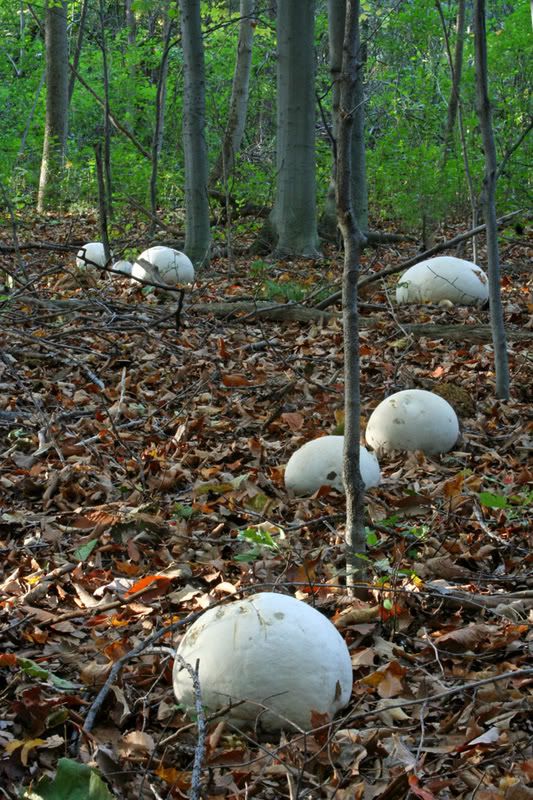
Puffballs are usually good, if picked fresh, and can be sliced and sauteed in Tamari (soy) sauce and margarine — a real delicacy!
Be a responsible forager, asking for permission when necessary. Be kind to the trees and plants you harvest, leaving enough behind for them to regenerate or reseed. Always leave some for the wild birds and animals that depend on them for survival. Never gather so much in one area that it looks stripped or bare . . . move along and take a little here and a little there as the animals do.
The most overlooked area to forage is our own gardens, yards, and property. If you have a dripping faucet, brook, or spring, plant mint, watercress, or other water-loving plants that can take care of themselves. In our own yard, we have many plants that require little but water. These include catnip, two types of oregano, peppermint, rosemary, volunteer mammoth sunflowers, garlic, and Echinacea Augustifolia. Our garden offers foragable edibles like Lamb’s Quarters and squash blossoms, which we dip in blue cornmeal batter and fry. My most wonderful garden “weed,” however, is Purslane.

It can be enjoyed for its tangy taste in raw salads, or fried lightly with other vegetables. Native Peoples have always valued this super-nutritional plant. Traditional herb lore prescribes this lowly plant as a treatment for the “sugar” disease.
Finally, one might consider becoming a modern-day Johnny Appleseed. If you are aware of ditches, brooks, or other damp areas, try planting Mammoth Sunflowers, watercress, tomatoes, or other (legal) herbs, trees, or seeds and care for them periodically during their initial growing stages. A few squash or pumpkin seeds can yield enormous amounts of food. Just don’t be too disappointed if fellow foragers discover and harvest your plants. True earth farmers and caretakers know that if we could give as freely as Mother Earth, no one would ever go to bed hungry.
Our surroundings are overgrown with edible herbs, greens, berries, roots, nuts, seeds and mushrooms, which survive the herbivores who dine on them by prolifically reproducing-so much so that people incorrectly identify them as "weeds." Although certain wild plants are poisonous, there are plenty of edibles that are easy to recognize, tastier than anything you buy, super nutritious and just plain fun to gather and cook with.

Tuesday, August 17, 2010
Fireweed
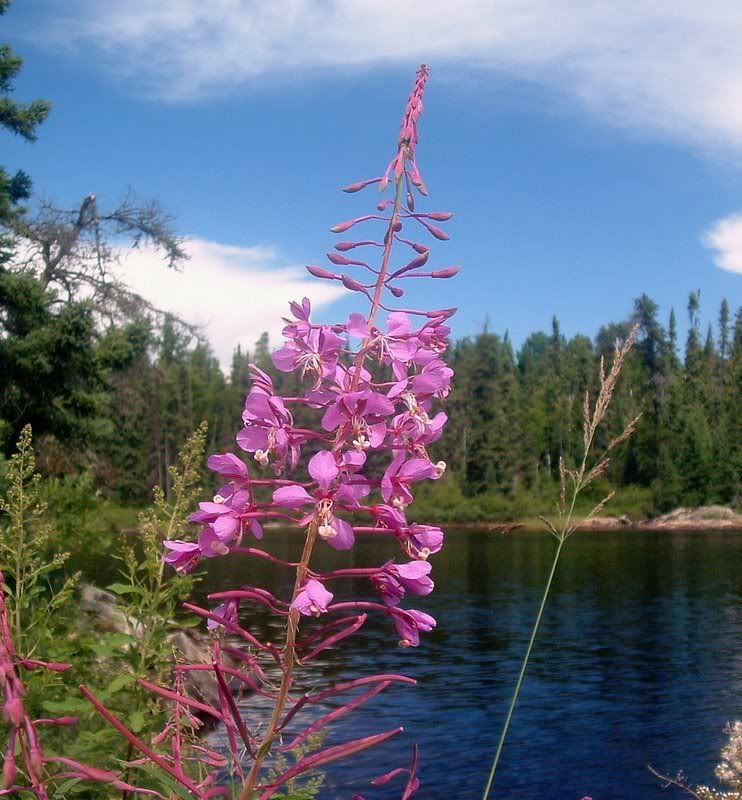
Fireweed grows abundantly here in Maine in blueberry barons,along roadsides and in old burn areas.
Epilobium angustifolium is synonymous with Chamaenerion angustifolium & frequently mispelled augustifolium. It is circumpolar in distribution beginning in the subarctic regions. Due to its extensive range it has a plethora of common names, but the foremost name is Fireweed.

Because it has willow-like leaves its second most common name is Willow Herb with sundry variants: Rosebay Willowherb, Bay Willow, Flowering Willow, French Willow, Persian Willow, Willow Weed, Giant Showy Willowherb, Great Willowherb (as distinct from the small alpine willowherb), Spiked Willhowherb, or Tame Withy (after willow withe). It is frequently called Blooming Sally, especially in Ireland, alluding to both the flowers, Sally being a corruption of the Latin Salix (Willow).
Both E. angustifolium & E. palustre are sometimes known as Wickup, Wickop, or Wicopy. It shares this name with Dirca palustris also known as Wicopy, Leatherwood, Moosewood, or Rope-bush. Both plants share in common that they were used to make twine or ropes or were woven with reeds or rushes to form tough mats. The name Wickup has the same proto-Algonquin origin as Wickiup or Wigwam, a hut covered with mats woven from just such plants.
It has been called Wild Asparagus because edible, & for its blossoms, Purple Rockets, Mare's Tail, & in Great Britain, Bloomi. It has also been called pileworts because of its medicinal use, though lesser celandine has a greater claim to that name. A recurring name that puzzles me is Blood Vine, because it never grows like a vine, though it does produce a great deal of sap (blood) that was used as syrup by Inuit people.
In Italy E. angustifolium is known as the Herb of Saint Anthony (Erba di Sant Antonio), while in Spain E. hirsutum has the same name (Yerba de San Antonio) & E. spicatum along with other species of Epilobium are called St. Anthony's Laurel (Laurel de San Antonio).
The association with the saint arose from a belief that Fireweed was the herb to treat Saint Anthony's Fire, a horrific disease of the Middle Ages caused by fungal poisoning from ergot-contaminated rye. It caused berserk rages, hallucinations, & a feeling of being burned at the stake, before fingers & other extremities began to black & drop off. It was believed that St. Anthony was able to cure this affliction, & Fireweed was one of the plants that peasant lore lit upon as Anthony's curative herb.

Fireweed is such a common wildflower throughout our county that there's even a Fireweed Road. It's beautiful in full flower almost as soon as the wild foxgloves have finished flowering in the same vicinities, & continues flowering throughout summer.
Flowers are followed by fluffy seeds dispersed upon the wind. Native peoples also mixed the fluff with dog hair or other animal hair to manufacture blankets, or just used the fluff to get fires started. In Europe fireweed fluff used to be mixed into cotton for the manufacture of stockings.
Fireweed is common along roadsides, meadows & clearings, edges of conifer & deciduous forests, sea level to sub-alpine levels, in wet or dry locations, & its one of the first wildflowers to appear in clear-cuts & burned areas. Indeed its common name Fireweed arose because it so quickly colonized areas that had experienced forest fire, both from the facility with which the seeds reach new areas, & because its thick rhizomous root system can survive forest fires. When Mount Saint Helen's exploded, a year later the Fireweeds were first to recover, turning the blasted hillsides purple.

This tough perennial ranges in height from four feet to eight feet, its yellow stems sporting purple flowers in tapered racemes. They are especially liked by bees & Fireweed Honey is available from our county on a pretty regular basis. It is a host plant for the North American yellow-banded sphynx moth (Proserpinus flavofasciata).
It is very widespread here & is the floral symbol of the Yukon. It also grows in northern Europe, where it became famous for springing up where soil had been cleared & disrupted by aerial bomb attacks during World War II. It even sprang up flowering amidst the rubble of the bombed inner city of London.
Some tribal peoples used fireweed medicinally to topically treat infected wounds. Modern herbalists regard it as an antispasmodic medication taken internally. In Europe it is still used to treat diarrhea & other bowel syndromes, & it is an ingredient of many commercially prepared alternative remedies for everything from cosmetic skin care to asthma to baldness to kidney disease.
FIREWEED & RED CLOVER
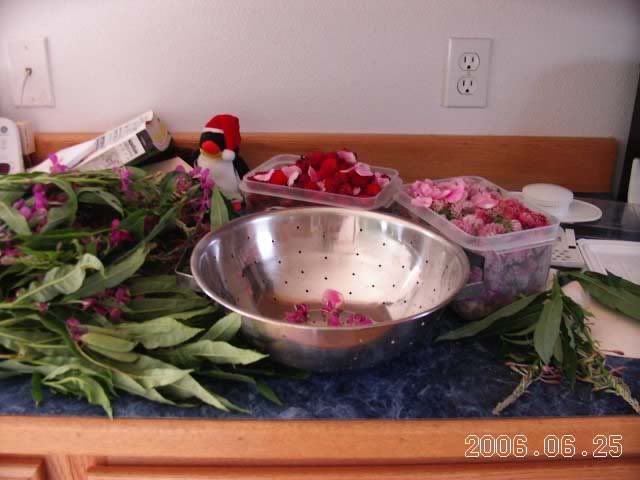
Many of its alleged values are false or exaggerated, but a good deal of authentic medical research has been done with Epilobium species of America & Europe, & it is in fact one of the more promising herbs. It has been shown to inhibit cell proliferation of the prostate [Vitalone et al, Pharmacology October 2003]. It is an effective antimicrobial [Battinelli et al, Farmacology May-July 2001], & it has several other potential values, possessing chemical components that are a proven anti-inflammatory.
Early season shoots are a delicacy harvested late spring or early in the summer. Shoots & young stems are peeled & can be eaten raw or steamed as a substitute for asparagus. Yupik eskimos preserved the stems in seal oil in order to have them year-round, & their name for Fireweed, Pahmeyuktuk, referred to its edibility. The peelings of the stems were not wasted as they were dried & used to weave strong twine for fishing nets.
Very young leaves are also edible in salads or in soups or steeped for use as a tonic tea for upset stomach. Mature leaves become tough & bitter, but by then the unopened flower buds are tasty for salads or in stir-fries. A syrup was traditionally extracted from the stems & flowers, having a high mucilage content that made it useful among native peoples in preparing berry-cakes that dry solidly. Today the flowers are harvested to make Fireweed Jelly, available from small cottage-industry canning companies including Native American companies.
Pioneer Alaskans used the sweet pith in the manufacture of ales & vinegars. As an intoxicating beverage it was rendered potently hallucinatory with the addition of Fly Agaric, Agaricus muscarius.
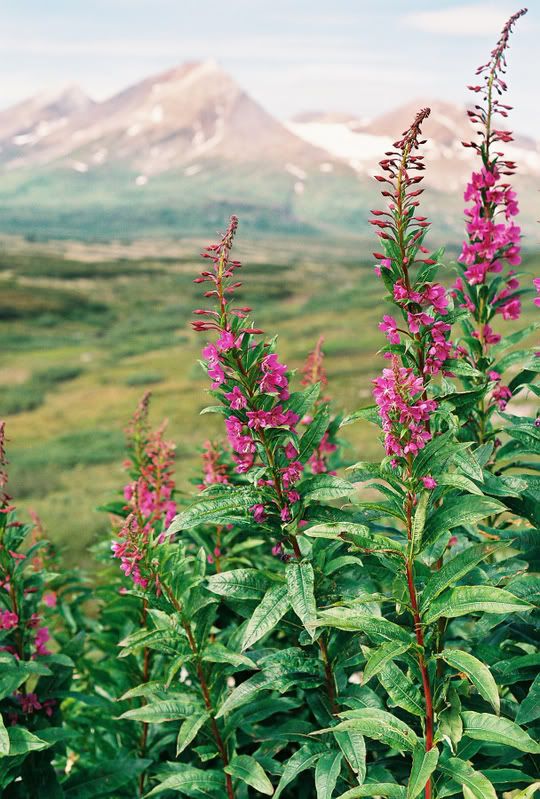
Subscribe to:
Comments (Atom)